18
Jun
Published in Masses | no comment
14
Jun
Third Sunday after Pentecost
by Mons. Ignacio Barreiro Carambula
Nothing happens in the realm of grace by mere chance. So two days after the great feast of the Sacred Heart in which we meditated on the love of Jesus for us sinners, today on this Sunday the gospel that the Church has chosen for us makes us ponder on the this great concern of Christ for the salvation of sinners.
In the opening prayer we ask to place our total trust in Jesus. As we remembered in the introit we cannot be saved by our poor and limited efforts because we are destitute and isolated until He comes to our assistance. Recognizing our destitution we place our total trust in Him because without Him nothing is strong, nothing is holy, no one can be saved. Without his guidance and leadership we cannot pass through this world to reach the Kingdom of Heaven.
In the letter of St. Peter we have a classic warning of the struggles which we have to endure in our combat to achieve salvation. Job reminds us that “The life of man upon earth is a warfare.” (7:1) Before the beginning of the passage that we have heard, St. Peter, after encouraging the members of the church to obey the priests he exhorted all the member of the community to be humble, and quoting the book of Proverbs he underlined that “God opposes the proud, but gives graces to the humble.” We always have to remember that humility is a typical and perhaps the most basic Christian virtue that is the contrary to the pride of the head of the fallen angel and his minions. Many virtues were known in the classical world, but humility was very rarely mentioned. Humility is as preparatory virtue to receive the Faith, because the humble is always ready to receive the saving instructions that come from God. We have a great example of this humility in the submission of Our Lady at the Annunciation. This basic message is strongly illustrated in the story of the Publican and the Pharisee that went together to pray at the Temple. The publican due to his humility was justified; the Pharisee due to his pride was rejected by God. In the text that we have heard St. Peter echoes the saying of Jesus in the Gospel of St. Matthew where the Lord taught us that, “Whoever exalts himself will be humbled; but whoever humbles himself will be exalted,” (Mt. 23:12) Interestingly enough this text has a direct bearing on the history of the Pharisee and the Publican that I have just mentioned. He then exhorts to place all our anxieties and concerns in God’s hands. This is a key statement about our spiritual life that should be repeated many times and that was reminded to us many times Saint Padre Pio.
St. Peter then points the finger at Satan accusing him rightly of being the unseen but very clear orchestrator and organizer of all the persecutions that the Christians suffer, both the external and the internal. His deadly intentions and predatorial tactics make him comparable to a rapacious lion on the hunt for food. We have abundant witness in the Old Testament on how much lions were feared in antiquity and how they were considered a symbol of the enemy of mankind. At the same time we have to be clear that our enemy is far worse than a lion. A ferocious beast can attacks from the outside, the Principe of lies can try to enter into the inner recesses our minds and souls with all sort of deleterious suggestions using for this purpose the weakness and fears that he knows we suffer. He might even disguise himself as angel of light to deceive us and to lead us into sin. He certainly will use our pride to lead us into perdition that is why humility and purity of heart are so important. So under the protection of our guardian angel we always have to be watchful and be prepared to resist his temptations through the use of right reason and through prayer. We also should be ready to pardon our enemies even if in some occasions we have to fight them with all the determination that it is necessary to stop their evil actions. Perhaps the best way to stop the evil that comes from their actions is to pray for their conversion. But when the actions of the evil ones endanger the innocent they have to be stopped in strongest possible ways using all the moral and legal means at our disposal.
The gospel opens with a fact that as it happened in many occasion on the life of Christ. Publicans and sinners drew near to Jesus to hear him and the Pharisees were scandalized. Jesus was ready to sit at table with those considered sinners. As table fellowship is an expression of friendship and acceptance the Pharisees were scandalized that Jesus ate with disreputable men. In many ways these sinners were closer to salvation than the Pharisees because they recognized their need for a savior to the contrary of the Pharisees who were secure in totally wrong way of their own justification. More so we have to remember that historically the Pharisees were largely responsible of the death Christ. Obviously from theologically we are all responsible through our sins of the death of Christ.
To explain how things were really standing Jesus tells to the Pharisees two parables. The story of the only lost sheep in contrast with the ninety nine that were safe and the story of the lost drachma. These parables indicate that God does not simply welcome penitent sinners but that He seeks them out.
We have to understand that for the listeners of Christ most of whom came from a pastoral world every sheep was valuable and that shepherds would naturally rejoice when they would recover a lost one. In the Old Testament God is depicted in more than one occasion as the Pastor of Israel. Jesus as the Messiah is also depicted as Pastor in many occasions in the different New Testament accounts. At the same time as history shows to us the title of Pastor is also a kingly title. We can see it in the history of the Kings of Israel and of the Rulers of Egypt.
St. Gregory the Great points that Jesus is shepherd that recovers the lost sheep of mankind. Hoisting it upon His shoulder is a symbolic indication on how the takes upon himself both the fallen nature of man and the heavy burden of man’s sins. To understand the value of the lost coin we have remember that a drachma was equivalent to one day’s wage. The conclusion of both parables is that there is great joy before the angels of God over each and every sinner that repents.
Today let us seek the intercession of the Blessed Virgin Mary to be strengthened to resist the temptation and traps of the enemy of mankind an to have faith and hope that the Lord in his infinite love has come to this world to save us from our sins.
May the Lord Bless you and Keep you.
Nothing happens in the realm of grace by mere chance. So two days after the great feast of the Sacred Heart in which we meditated on the love of Jesus for us sinners, today on this Sunday the gospel that the Church has chosen for us makes us ponder on the this great concern of Christ for the salvation of sinners.
In the opening prayer we ask to place our total trust in Jesus. As we remembered in the introit we cannot be saved by our poor and limited efforts because we are destitute and isolated until He comes to our assistance. Recognizing our destitution we place our total trust in Him because without Him nothing is strong, nothing is holy, no one can be saved. Without his guidance and leadership we cannot pass through this world to reach the Kingdom of Heaven.
In the letter of St. Peter we have a classic warning of the struggles which we have to endure in our combat to achieve salvation. Job reminds us that “The life of man upon earth is a warfare.” (7:1) Before the beginning of the passage that we have heard, St. Peter, after encouraging the members of the church to obey the priests he exhorted all the member of the community to be humble, and quoting the book of Proverbs he underlined that “God opposes the proud, but gives graces to the humble.” We always have to remember that humility is a typical and perhaps the most basic Christian virtue that is the contrary to the pride of the head of the fallen angel and his minions. Many virtues were known in the classical world, but humility was very rarely mentioned. Humility is as preparatory virtue to receive the Faith, because the humble is always ready to receive the saving instructions that come from God. We have a great example of this humility in the submission of Our Lady at the Annunciation. This basic message is strongly illustrated in the story of the Publican and the Pharisee that went together to pray at the Temple. The publican due to his humility was justified; the Pharisee due to his pride was rejected by God. In the text that we have heard St. Peter echoes the saying of Jesus in the Gospel of St. Matthew where the Lord taught us that, “Whoever exalts himself will be humbled; but whoever humbles himself will be exalted,” (Mt. 23:12) Interestingly enough this text has a direct bearing on the history of the Pharisee and the Publican that I have just mentioned. He then exhorts to place all our anxieties and concerns in God’s hands. This is a key statement about our spiritual life that should be repeated many times and that was reminded to us many times Saint Padre Pio.
St. Peter then points the finger at Satan accusing him rightly of being the unseen but very clear orchestrator and organizer of all the persecutions that the Christians suffer, both the external and the internal. His deadly intentions and predatorial tactics make him comparable to a rapacious lion on the hunt for food. We have abundant witness in the Old Testament on how much lions were feared in antiquity and how they were considered a symbol of the enemy of mankind. At the same time we have to be clear that our enemy is far worse than a lion. A ferocious beast can attacks from the outside, the Principe of lies can try to enter into the inner recesses our minds and souls with all sort of deleterious suggestions using for this purpose the weakness and fears that he knows we suffer. He might even disguise himself as angel of light to deceive us and to lead us into sin. He certainly will use our pride to lead us into perdition that is why humility and purity of heart are so important. So under the protection of our guardian angel we always have to be watchful and be prepared to resist his temptations through the use of right reason and through prayer. We also should be ready to pardon our enemies even if in some occasions we have to fight them with all the determination that it is necessary to stop their evil actions. Perhaps the best way to stop the evil that comes from their actions is to pray for their conversion. But when the actions of the evil ones endanger the innocent they have to be stopped in strongest possible ways using all the moral and legal means at our disposal.
The gospel opens with a fact that as it happened in many occasion on the life of Christ. Publicans and sinners drew near to Jesus to hear him and the Pharisees were scandalized. Jesus was ready to sit at table with those considered sinners. As table fellowship is an expression of friendship and acceptance the Pharisees were scandalized that Jesus ate with disreputable men. In many ways these sinners were closer to salvation than the Pharisees because they recognized their need for a savior to the contrary of the Pharisees who were secure in totally wrong way of their own justification. More so we have to remember that historically the Pharisees were largely responsible of the death Christ. Obviously from theologically we are all responsible through our sins of the death of Christ.
To explain how things were really standing Jesus tells to the Pharisees two parables. The story of the only lost sheep in contrast with the ninety nine that were safe and the story of the lost drachma. These parables indicate that God does not simply welcome penitent sinners but that He seeks them out.
We have to understand that for the listeners of Christ most of whom came from a pastoral world every sheep was valuable and that shepherds would naturally rejoice when they would recover a lost one. In the Old Testament God is depicted in more than one occasion as the Pastor of Israel. Jesus as the Messiah is also depicted as Pastor in many occasions in the different New Testament accounts. At the same time as history shows to us the title of Pastor is also a kingly title. We can see it in the history of the Kings of Israel and of the Rulers of Egypt.
St. Gregory the Great points that Jesus is shepherd that recovers the lost sheep of mankind. Hoisting it upon His shoulder is a symbolic indication on how the takes upon himself both the fallen nature of man and the heavy burden of man’s sins. To understand the value of the lost coin we have remember that a drachma was equivalent to one day’s wage. The conclusion of both parables is that there is great joy before the angels of God over each and every sinner that repents.
Today let us seek the intercession of the Blessed Virgin Mary to be strengthened to resist the temptation and traps of the enemy of mankind an to have faith and hope that the Lord in his infinite love has come to this world to save us from our sins.
May the Lord Bless you and Keep you.
Published in Sermons | no comment
14
Jun
The Sacred Heart of Jesus
by Mons. Ignaçio Barreiro Carambula
In this beautiful and powerful feast we remember the infinite love of Jesus for us. This is a love that leads to His incarnation and to His redemptive passion and death for us in the Cross. Jesus Christ, the Incarnate God, is the best possible manifestation of the love of God. Jesus reminds us that God loves us with a heart that is both human and divine. Pope Leo XIII said “There is in the Sacred Heart the symbol and express image of the infinite love of Jesus Christ which moves us to love in return.” A manifestation of God’s love that is really present in the Blessed Sacrament of the Altar. In this Sacrament we adore, receive, and we are nourished by the glorified body, the blood, the soul and divinity of Jesus Christ and it gives us the possibility of being transformed into Him and sharers of His infinite charity.
The first point I would like to make that we should not treat our adoration of the Sacred Heart of Jesus as a simple optional devotion. Here what we have is a development of dogma. We have here a way of understanding the infinite love of Christ that has a serious doctrinal weight. We have the truth of the infinite sacrificial love of Jesus that was revealed to us in Scripture but this truth has been better understood under the inspiration of the Holy Ghost through the study of holy theologians and the motion of private revelations. The Holy Ghost has acted on the basis of the magnificent prayer of St. Paul in the Letter of the Ephesians where he requests that we should be able to comprehend what is the breadth and the length, and the height and depth of the charity of Christ, a love that is constantly embracing the whole created universe. So we are not acting on the basis of private revelations we are acting under the guidance of the infallible magisterium of the Church which has put the seal of approval of the Vicar of Christ on many occasion in the last centuries to the study of great theologians and on private revelations.
The heart of the Gospel message is God’s love for sinners. We always have to remember that the main historical purpose of the incarnation of Christ is our salvation. St. John writes in his Gospel “For God so loved the world that he gave his only Son, so that everyone who believes in him might not perish but might have eternal life.” (John 3,16). We should always encourage adoration to the Sacred Heart of Jesus, which reminds sinners of God’s never failing personal love for them. At the same time knowing the pain that sin inflicts to Jesus Christ we should make all possible efforts to avoid it with the never failing assistance of His grace.
In our adoration to the Sacred Heart we are reminded that regrettably many times this burning love of Jesus is rejected in many occasions by mankind. That is why in His image His burning heart is surrounded by a Crown of Thorns. In the lives of many saints of the last centuries we have a powerful witness of this mysterious and constant suffering that will last until the end of the world. I can mention examples from the writings of St. Padre Pio, of St. Gema Galgani and St. Faustina Kowalka. I say mysterious because it is difficult to understand how Christ is enjoying the beatitude of Heaven and at the same time suffering for us. We have to atone for this rejection, but the best reparation is by making all possible efforts to convince the ones that the Lord has placed close to us to accept His saving love.
The Heart of Jesus is especially moved by those who suffer in any way — be it mentally, physically or spiritually. All of us suffer from different and difficult crosses, but we believe that when we offer our suffering — in union with Christ’s suffering on the cross — our suffering, as members of the mystical body of Christ, can help to atone for our own sins, for the sins of others and to offer reparation to the suffering Christ for all the times His love is rejected. St. Paul writes “Now I rejoice in my sufferings for your sake, and in my flesh I am filling up what is lacking in the afflictions of Christ on behalf of his body, which is the church…” (Colossians 1, 24). Here we should remember that in itself the Cross of Christ was more than sufficient to redeem us, but in His infinite wisdom He decided to make us His co-redeemers to make us participate through our efforts in the Redemption of all mankind.
Why some are burdened with heavier crosses than others is a mystery, a mystery that probably will be explained to us in Heaven. A mystery explained to some extent in his great work on Evil by St. Thomas Aquinas. The great Carmelite Nun St. Mary Magdalen de’Pazzi said: “You will be consoled according to the greatness of your sorrow and affliction; the greater the suffering, the greater will be the reward.” Christ promises consolation to those who bear difficult crosses when he says “Come to me, all who are weary and heavy-laden, and I will give you rest.” (Mt. 11:28)
It is ultimately in the Sacred Heart of Jesus that we find comfort and the love we seek. The Heart of Jesus burns with love for each and every one of us. Our worship to the Sacred Heart of Jesus can take many forms such like displaying and honoring an image of the Sacred Heart in our homes, as we have decided to do it several years ago in this chapel, reciting the Litany of the Sacred Heart of Jesus or making an Act of Consecration to the Sacred Heart. We particularly recommend the First Friday devotion which many of you practice in a very faithful way. In 1674, Jesus appeared to St. Margaret Mary Alacoque and He promised to her:
“In the excess of the mercy of my Heart, I promise you that my all powerful love will grant to all those who will receive Communion on the First Fridays, for nine consecutive months, the grace of final repentance: they will not die in my displeasure, nor without receiving the sacraments; and my Heart will be their secure refuge in that last hour.”
Our Lord also promised to give priests the power to touch the most hardened hearts. But this promise when can say that also applies to all you who work faithfully in the apostolate of the Church, in particular in many apostolates that certainly are close to His Heart like the pro-life apostolate, or in the educational apostolate and last but not least, in the Liturgical Apostolate to make the Liturgy of the Church worthy of the Lord to whom were are offering our adoration. The worship of the Sacred Heart will help us speak the truth with love to sinners who feel far from God, and from his Church and will help us to gently lead them back to the Good Shepherd, who is meek and humble of heart. (Matthew 11, 29)
We finish our prayer asking with total confidence that through the intercession of the Blessed Virgin Mary we may know better and love more the Most Sacred Heart of Jesus.
Published in Sermons | no comment
11
Jun
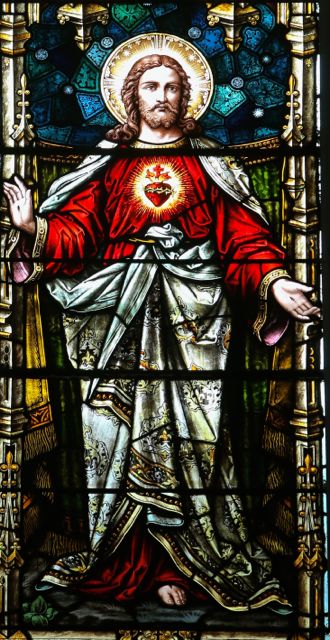
This coming Friday, June 12, 2015 will be the Feast of Most Sacred Heart of Jesus. At Holy Innocents Church in Manhattan, there will be a Solemn Mass at 6 PM.
At the end of the Mass, there will be a recitation of the Act of Reparation to the Most Sacred Heart of Jesus and the choir will chant the Litanies of the Most Sacred Heart in the presence of the Most Blessed Sacrament exposed. Beautiful blessed holy cards will also be distributed to the faithful in attendance.
Following this Mass, there will be a public Rosary Crusade for Holy Marriage and the traditional family organized by Matthew Zwolak (young Altar server at Holy Innocents). This prayer crusade will include the recitation of the Holy Rosary and other prayers on Herald Square for the preservation of traditional holy marriage in society.
On Saturday, June 13, 2015, the Feast of St. Anthony of Padua, there will be a Sung Mass at 1 PM. Blessed holy cards of St. Anthony as well as blessed St. Anthony’s bread will be distributed to the faithful in attendance.
Published in Events, Masses | no comment
10
Jun
Sermon of Father Richard Cipolla for the Solemnity of Corpus Christi
St. Mary Church, Norwalk, June 7, 2015
From the sixth chapter of the Gospel according to St. John: “At this the Jews quarreled among themselves saying:’ How can he give us his flesh to eat’”?
Who are these Jews? These are the co-religionists of Jesus’ time, those who could not bear to hear Jesus’ words about his flesh and blood as real food and real drink. But “the Jews” are also those who at any time and any place cannot bear to hear these words of Jesus. They are those who murmur in opposition, they who ask “What is the point of this feast of Corpus Christi? We have Holy Thursday to celebrate the institution of the Eucharist. That is a logical feast. Why this other feast, what is the point, and what does this tell us, what does this teach us, what difference does this feast make in my life?”
I will leave these questions of the murmurers aside for a moment and indulge in personal reminiscence. During my last year of study at Oxford, while I was an Anglican priest, I was appointed chaplain of Corpus Christi College, something I never dreamed would happen to me as a Yank at Oxford, for it is a glorious thing in so many ways to be a chaplain at an Oxford College, dining at high table, officiating at services in a lovely chapel, and knowing that you stand in a line of men that stretches back before the Protestant Reformation who served the college in this spiritual way. Corpus Christi College’s name, ever so Catholic, belies its strong role in the Reformation in England, for not only did Corpus, as it is commonly called, furnish a number of noteworthy Anglican divines, it was also the scene of the burning of Eucharistic vestments in the quad, signaling in the end of popish worship. There they burned: chasubles, albs, cinctures, amices, the whole lot, those symbols of the Mass as sacrifice. When I was told this story I was tempted to ask which way the smoke from this sacrifice went—up like Abel’s or down like Cain’s. But that would have been bad form, so I made up my own mind about this.
May came that year as every year it does, and in Oxford May is especially beautiful. On May 1st the Magdalene College choir boys sing a hymn to our Lady from the tower, less a religious gesture than a traditional and cultural one. The gardens in Christ Church, where Alice fell into Wonderland, are at their most beautiful. And that year the feast of Corpus Christi fell in late May. What to do, I asked myself, as chaplain of Corpus Christi College on this feast day which had not been celebrated there since the Reformation. I decided that there was nothing else to do than to celebrate this wonderful day with a Solemn Mass presided over by the Anglican suffragan Bishop of Oxford whose High Church sympathies were well known and a man of personal holiness. And so we did. The chapel was packed, not its usual condition, for the word was out that the crazy American chaplain was going to celebrate Corpus Christi. We had to borrow vestments for the Eucharist—needless to say, there were none in the college sacristy. The service was wonderful, the singing, the flowers, the candles and incense, the beauty, the sense of the worshipping community in Corpus Christi chapel linked at that time to eternity.
Needless to say, there was some consternation among some college members. I remember a group of Evangelical Anglicans and some Protestant students who met with me to discuss the very idea of celebrating Corpus Christi at all and the way in which we celebrated it. Their leader was an earnest young man who was studying for the Presbyterian ministry. I had talked with him often and liked him very much. This is what he asked me: “What does it all mean, what does it teach us, why would you do this? There is no reason to celebrate this feast, since Christ is in heaven and not in a piece of bread. What can all of this mean? What is its purpose? And furthermore, this smacks of Catholicism.”
To that charge and all the others I pled guilty, but I had no answer for this young man, as I have no answer to the many murmurers who in my life as a priest, and even more often as a Catholic priest, who when confronted with liturgy celebrated solemnly and beautifully, ask: “What is the point? What are you trying to do with all of this business, these vestments, the incense, the singing, these gestures, all of this that can could be done in twenty minutes?” That they ask what are YOU trying to do blocks any answer that I could possibly give, for in that question there is such a basic misunderstanding of the Liturgy that I can only be speechless. “How can he give us his flesh to eat and his blood to drink?” He cannot if the purpose of the Liturgy, the Mass, is the moral elevation of the people, teaching people how to manage their lives. He cannot if the Mass exists so that people feel good about themselves and learn how to interact with their neighboring pew-person. He cannot if the Mass is the manipulation of the congregation by the “presider” to whip them into some sort of frenzy of participation which is measured by how many people are doing things within the liturgical celebration. He cannot if the Mass is focused on who is in the congregation, having special Masses for certain age groups, religious organizations or clubs. In fact he cannot—murmur,murmur,murmur—as long as the Liturgy is seen as something with a purpose at all, in the sense of something with an aim, such that if that aim is met we can say: “That was a good Liturgy” and then congratulate ourselves on a job well done.
Some of you know that this past week I was in New York City as one of the two organizers of the international Sacra Liturgia Conference, a conference on the state of the liturgical life of the Church. The speakers, including Cardinal Burke and Archbishop Cordileone, were excellent. The Vespers and Masses each day were of the epitome of worship in spirit and in truth, where beauty and truth kiss. The Conference ended with a Solemn Mass of Corpus Christi and a procession through streets of the Upper East Side of Manhattan, from the parish of St. Catherine of Siena near Sloane Kettering to the magnificent church of St. Vincent Ferrer on Lexington Avenue. There are some here at this Mass who were part of this procession: choir, altar servers, musicians, priests, members of the Knights of Malta, lay men and women. There were over 125 priests and seminarians in cassock and surplice, at least that number of laity, and Bishop Perry from Chicago carrying our Lord in the monstrance. Everyone who was part of this procession agrees that it is something that each of us will never forget. The New York police blocked off the streets on our route: 1st Avenue, then 2nd Avenue, then 3rd Avenue, then a long stretch of East 66th Street as we made our way to St. Vincent Ferrer. The New Yorkers along the route stopped in their tracks, some took photographs, but all were silent and respectful. Listen to what one policeman who was assigned to the route said: “Do you realize the peace you’ve brought here?” He pointed to the way people were stopping and taking it all in. Even the cars forced to stop to let the procession go by refrained from honking their horn in frustration. A moment of peace in the midst of the frenetic pace of New York. Another witness said: “The procession was magical. We clearly need more of these….It almost felt like this “new evangelization” that everyone speaks about”.
As the procession crossed Third Avenue on 66th Street to approach St. Vincent’s, the large choir in the procession began Fr. Faber’s Eucharistic hymn, “Jesus my Lord, my God, my all”. Everyone in the procession joined in: “Sweet Sacrament, we thee adore, O make us love thee more and more.” And the sound bounced and reverberated from the stone apartment buildings flanking the street, filling the air with this soundful song of praise, as the voices of nearly 300 Catholics of faith filled the air. We processed into the church of St. Vincent Ferrer, the high altar ablaze with candles, and Bishop Perry from the magnificent altar gave Benediction of the Blessed Sacrament to the crowd assembled there.
We here at St. Mary’s will go from this Mass to process through the streets of Norwalk with the Blessed Sacrament. What will people say or do or think as they see on going down West Avenue, singing, led by the Cross and candles, smoking censer and the priest carrying the Blessed Sacrament under a canopy? And what will you say when someone you know stops you tomorrow or the next day to ask: ”What was that all about? What were you doing? What was the point of it all?” Will you be able to tell them the truth? There is no purpose. We were just being children of God playing before the Lord in joy.
Published in Sermons | no comment
Published in Masses | no comment
9
Jun
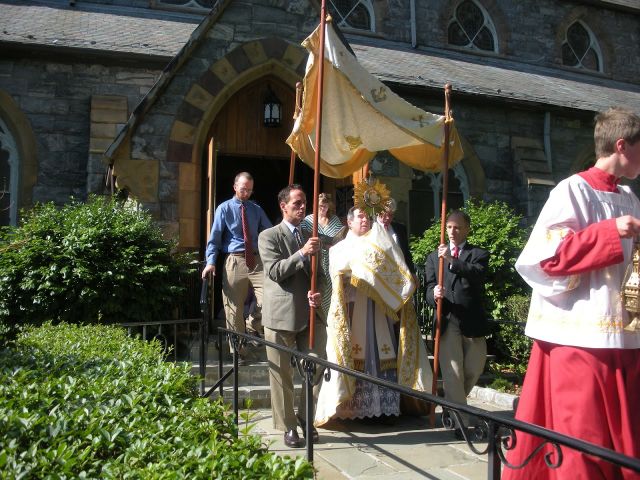
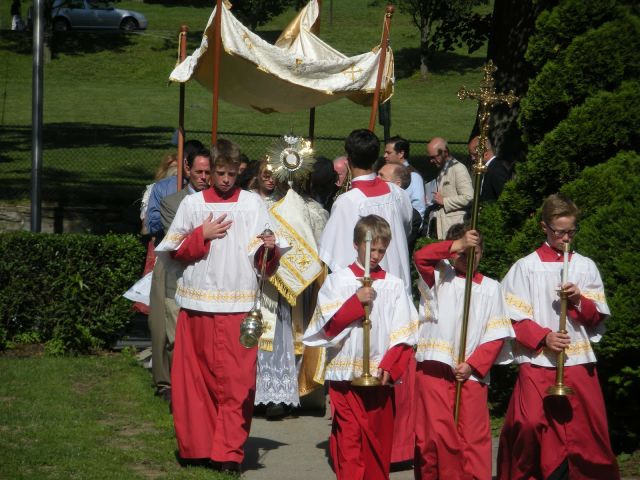
Photos from the Corpus Christi celebration at Immaculate Conception Church in Sleepy Hollow, NY this past Sunday. Photos courtesy of Ann Whelan
Published in Photos, Uncategorized | no comment
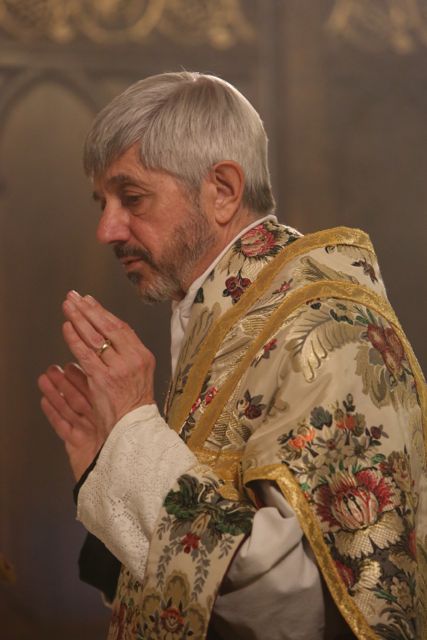
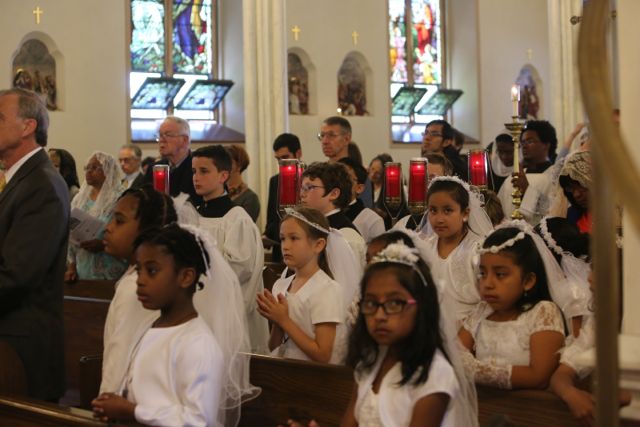
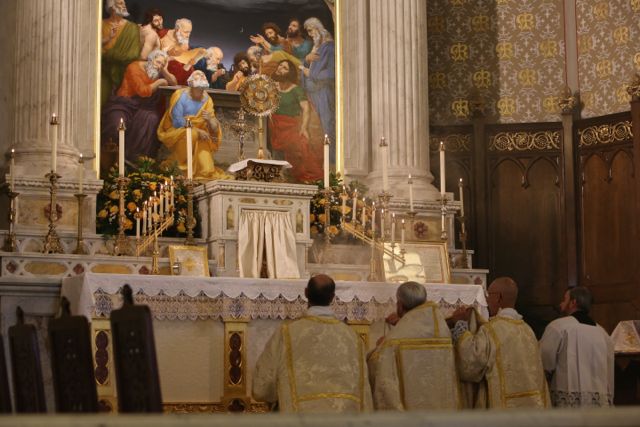
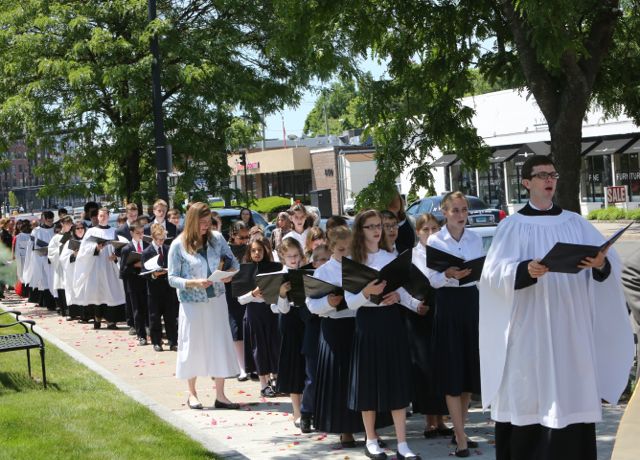
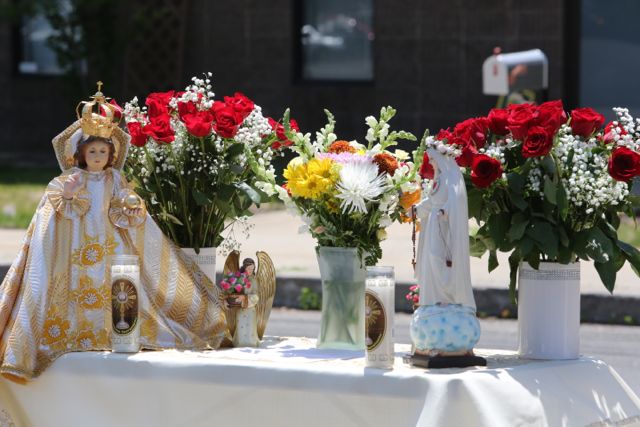
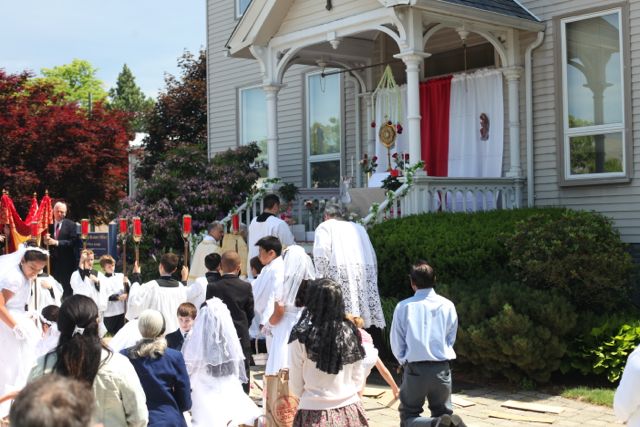
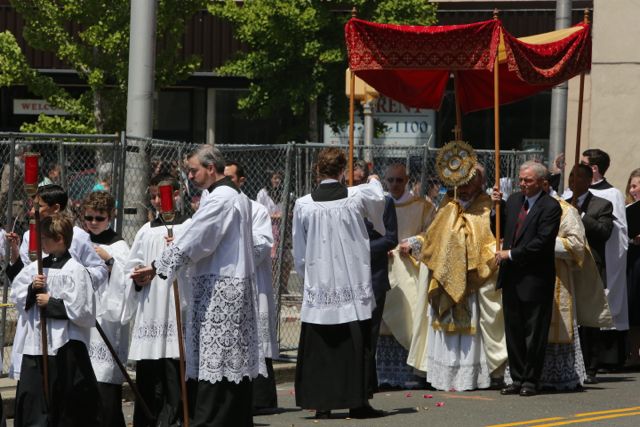
Today was a beautiful day for the celebration of the feast of Corpus Christi at St. Mary Church, Nowalk. A procession around the neighborhood and Benediction followed the Mass. Fr. Richard Cipolla was the celebrant.
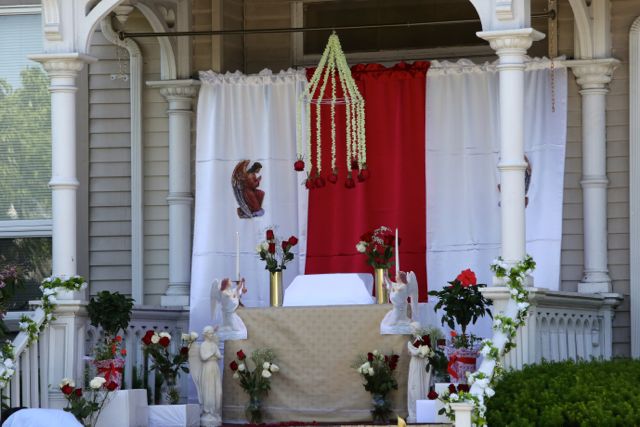
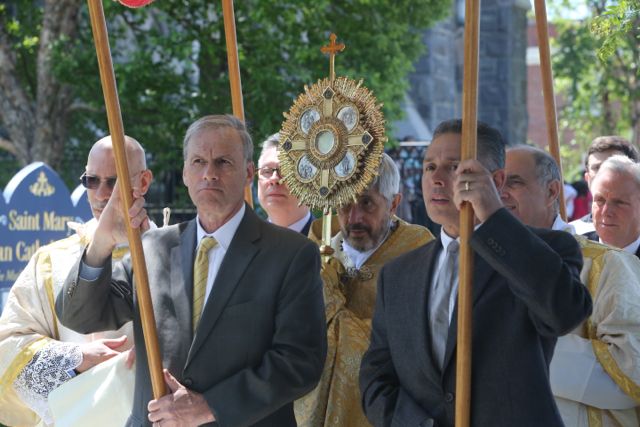
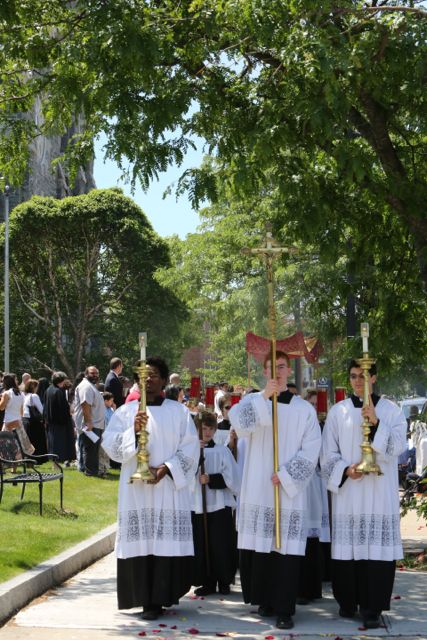
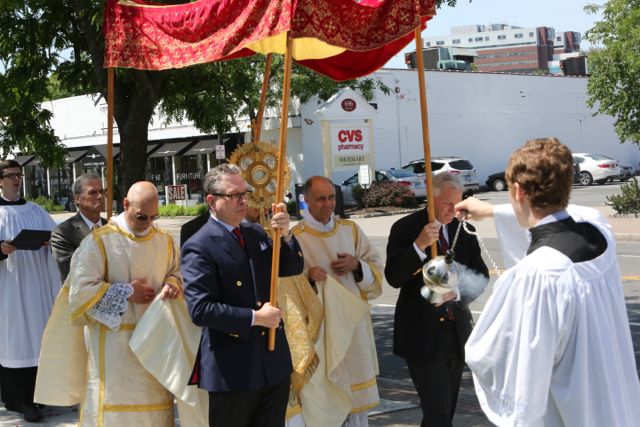
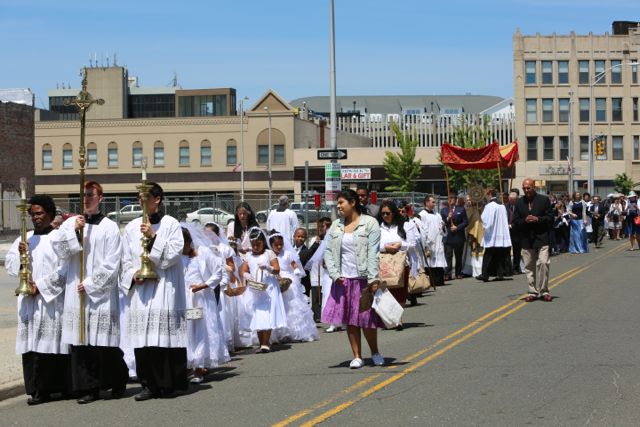
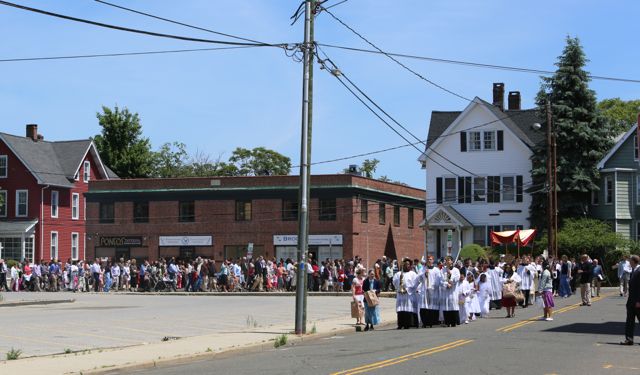
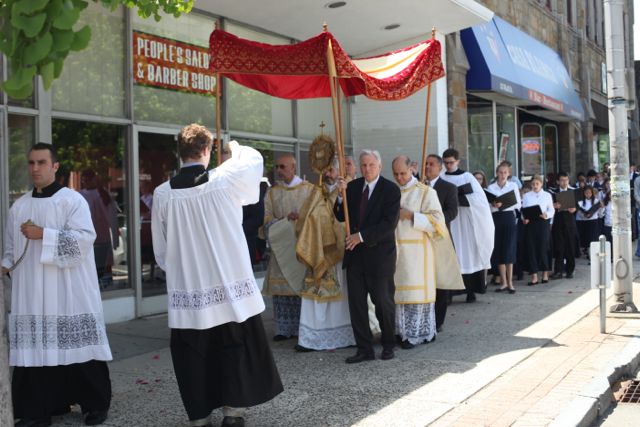
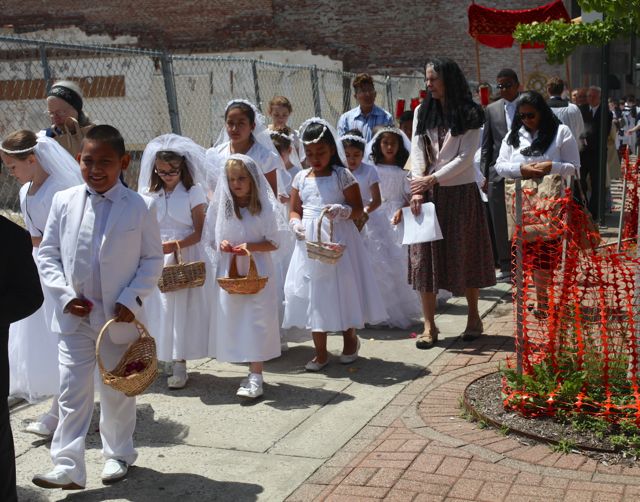
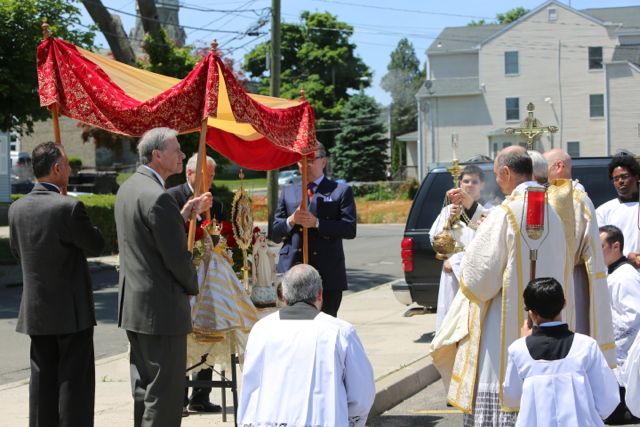

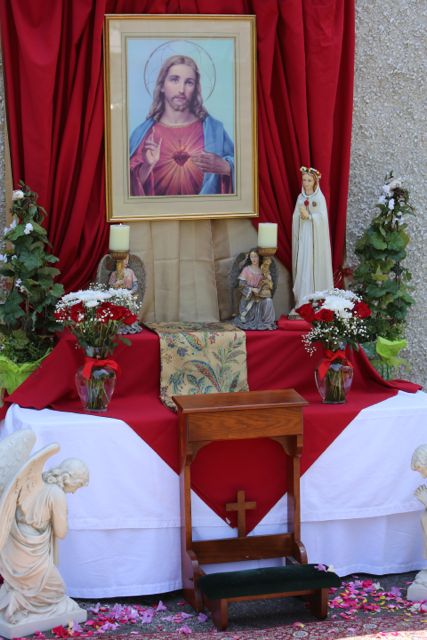
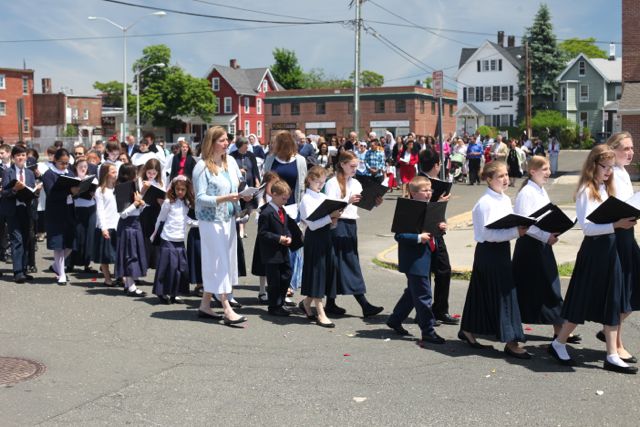
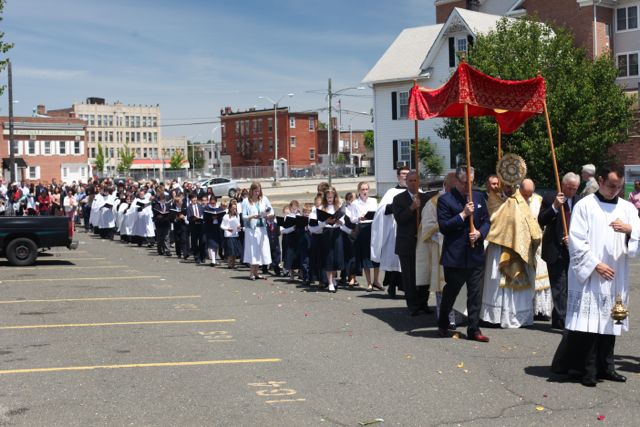
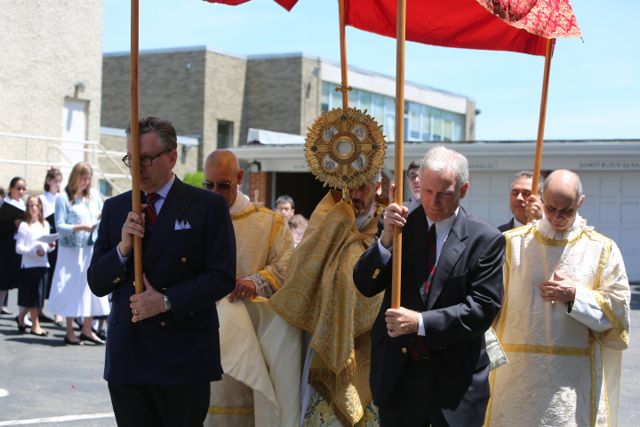
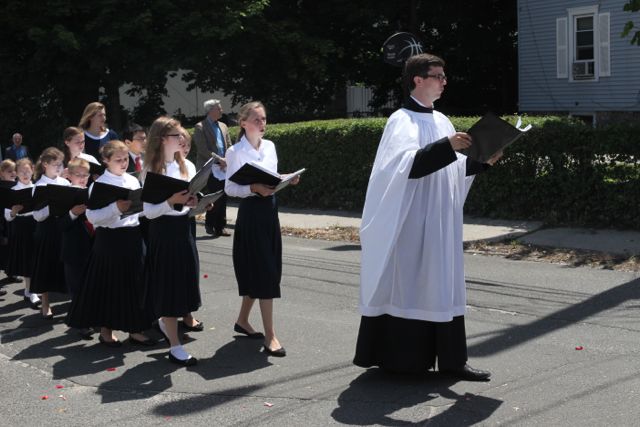
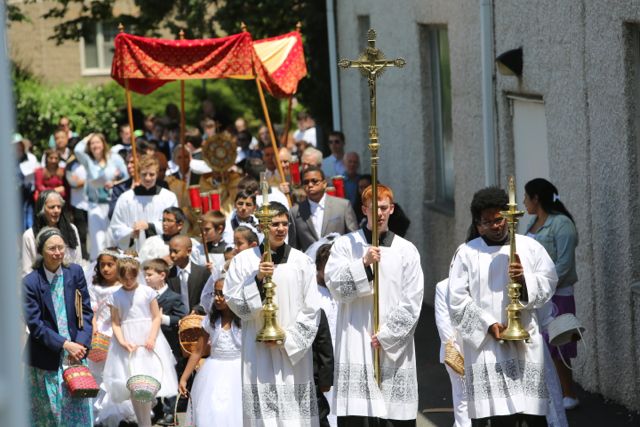
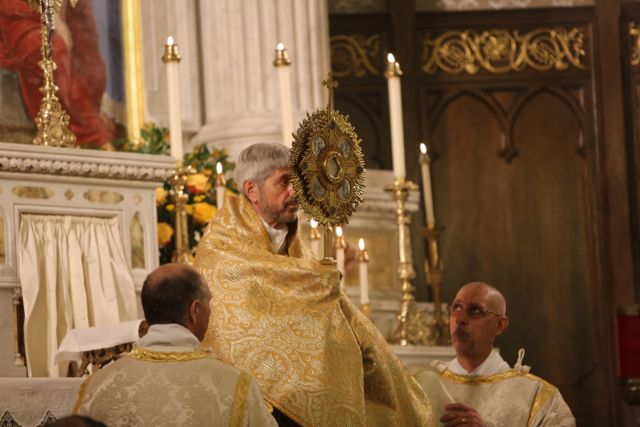
Published in Photos | no comment
6
Jun
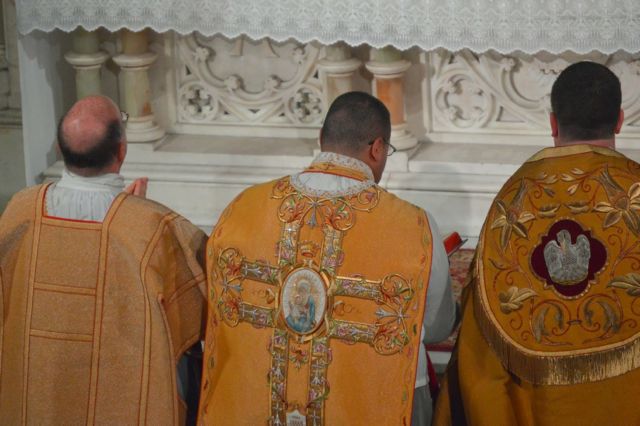
Arrys Ortanez reports:
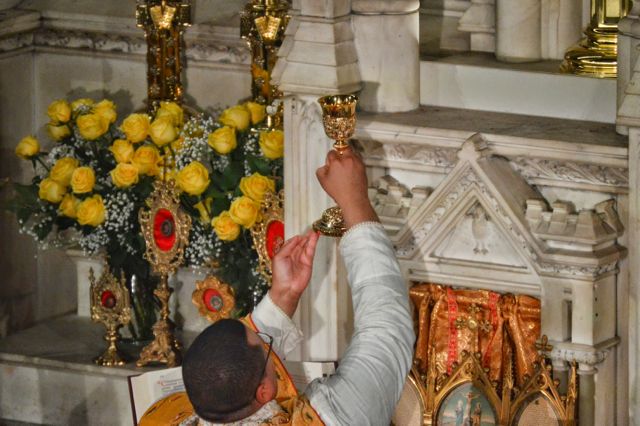
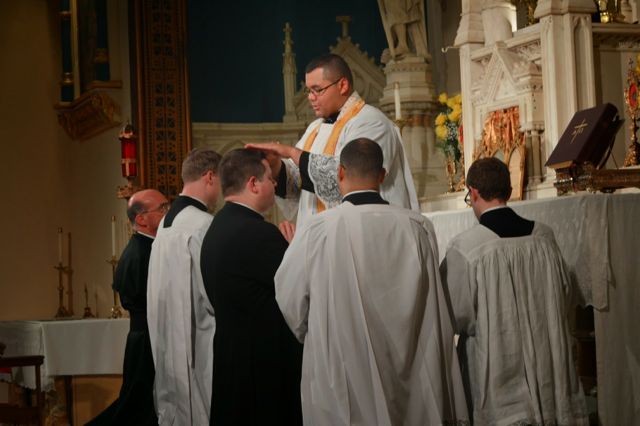
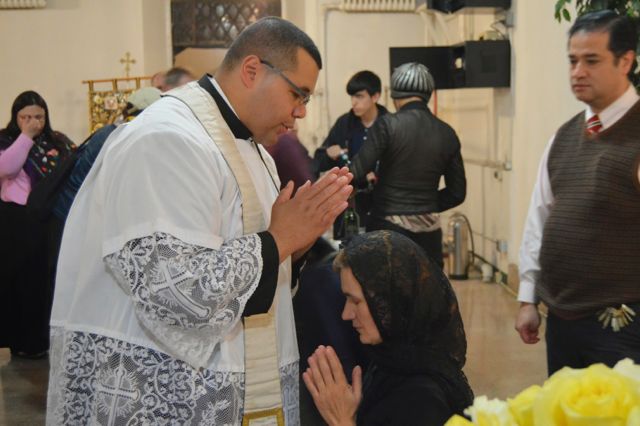
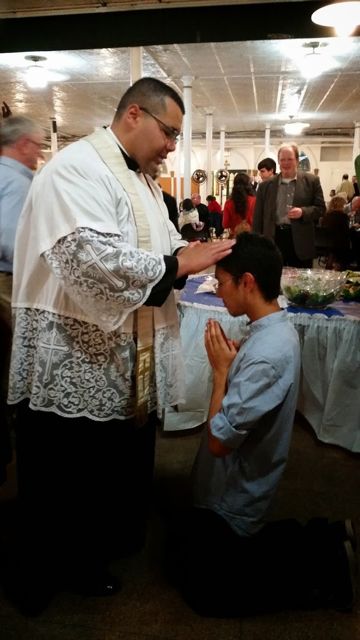
The newly ordained Fr. Simon Zurita FSSP celebrated a Solemn High Mass in thanksgiving in his hometown, the big apple, New York City, at The Church of the Holy Innocents.
The Mass was assisted by many servers and priests, both diocesan and FSSP.
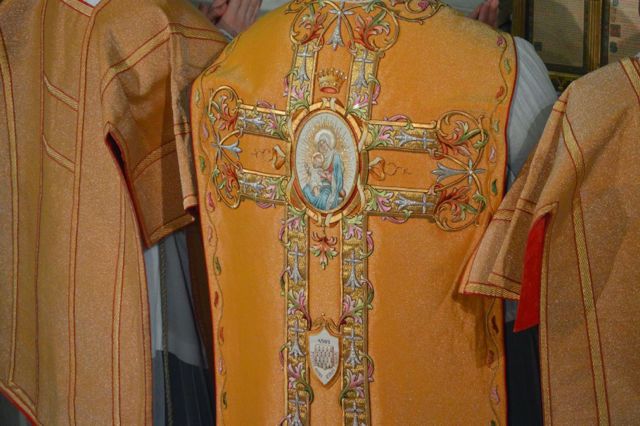
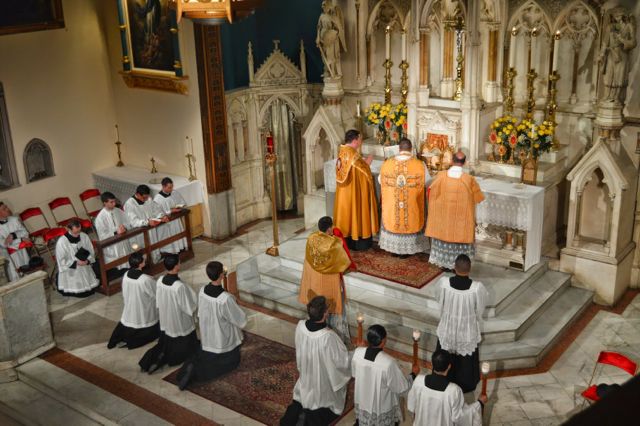
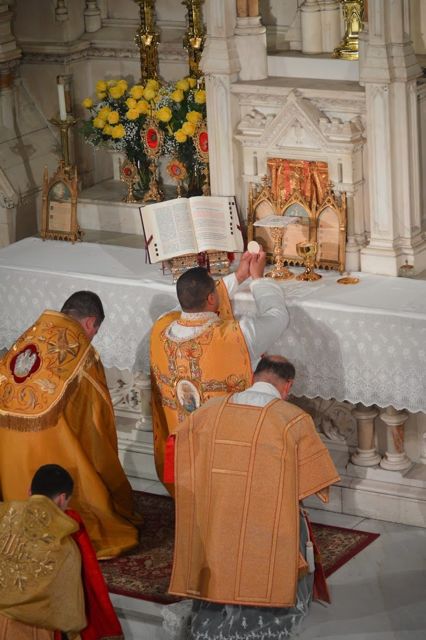
(Photographs courtesy of Mr. Arrys Ortanez – for complete set see HERE.)
Published in Masses, Photos | no comment
6
Jun
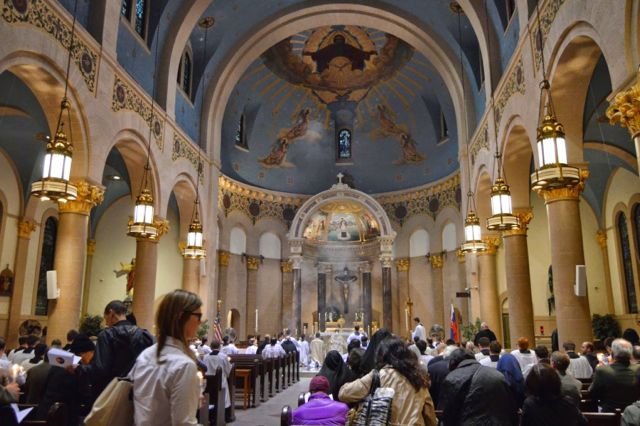
St. John Nepomucene church, New York.
Mr Arrys Ortanez provides another photographic perspective on the majestic procession through the streets of New York last Thursday evening.
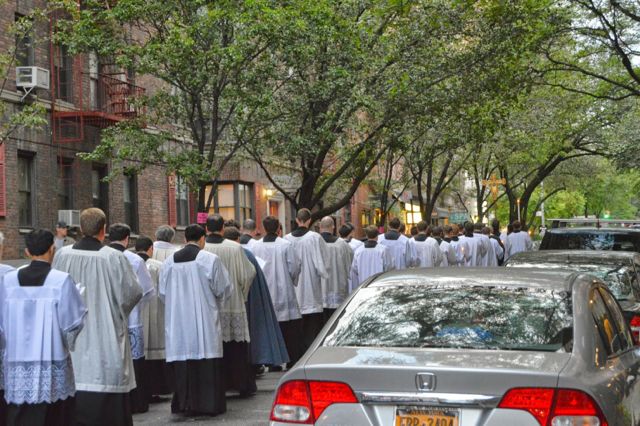
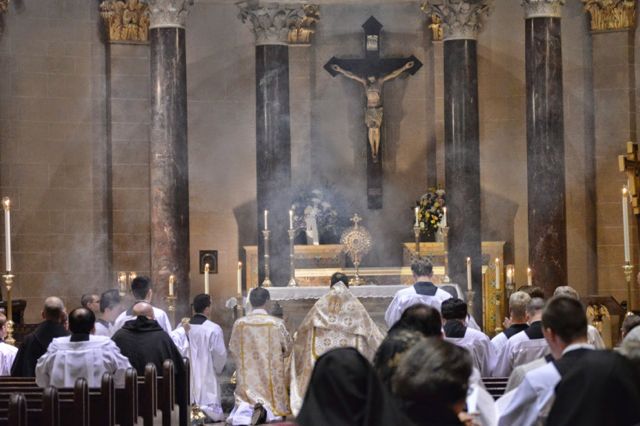
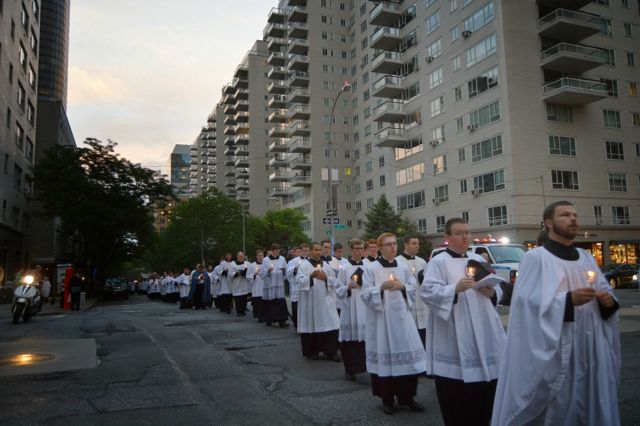
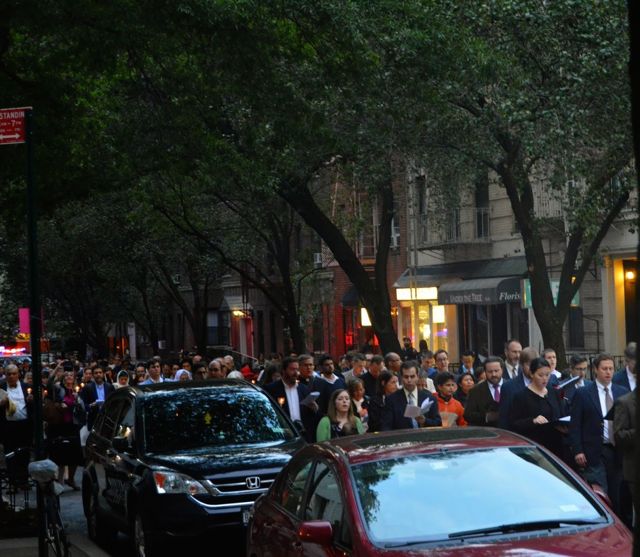
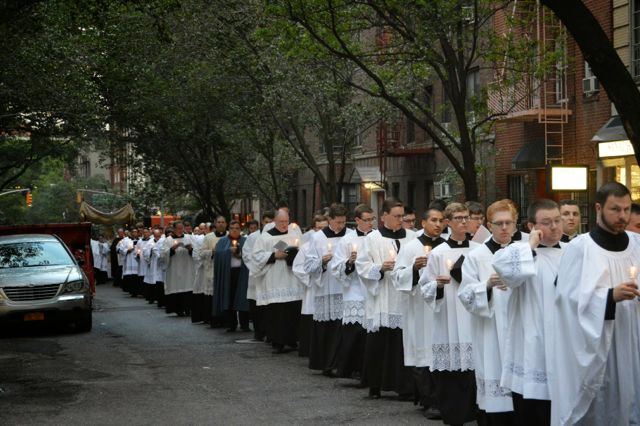
Photos courtesy of Mr Arrys Ortanez – for his complete set on the mass and procession see HERE.
Contact us
Register
- Registration is easy: send an e-mail to contact@sthughofcluny.org.
In addition to your e-mail address, you
may include your mailing addresss
and telephone number. We will add you
to the Society's contact list.
Search
Categories
- 2011 Conference on Summorum Pontifcum (5)
- Book Reviews (110)
- Catholic Traditionalism in the United States (27)
- Chartres pIlgrimage (17)
- Essays (181)
- Events (702)
- Film Review (7)
- Making all Things New (45)
- Martin Mosebach (35)
- Masses (1,387)
- Mr. Screwtape (46)
- Obituaries (20)
- On the Trail of the Holy Roman Empire (27)
- Photos (358)
- Pilgrimage Summorum Pontificum 2021 (7)
- Pilgrimage Summorum Pontificum 2022 (6)
- Pilgrimage Summorum Pontificum 2023 (4)
- Sermons (79)
- St. Mary's Holy Week 2019 (10)
- St. Mary's Holy Week 2022 (7)
- St. Mary's Holy Week 2023 (7)
- St. Mary's Holy Week 2024 (6)
- St. Mary's Holy Week 2025 (7)
- St. Mary's Holy Week 2026 (11)
- Summorum Pontificum Pilgrimage 2024 (2)
- Summorum Pontificum Pilgrimage 2025 (7)
- Summorum Pontificum Pilgrimage 2026 (1)
- The Churches of New York (219)
- Traditionis Custodes (57)
- Uncategorized (1,413)
- Website Highlights (17)
Churches of New York
Holy Roman Empire
Website Highlights
Archives
Support the Society of St. Hugh of Cluny
[powr-hit-counter label="2775648"]