8
May
6
May
Eamon Duffy, that is – at George Weigel’s expense:
“Ecstatic liberals hailed the return of the spirit of Vatican II, while agitated conservatives mounted damage limitation exercises. George Weigel, biographer and confidante of John Paul II, insisted that Evangelii Gaudium demonstrated a “seamless continuity” between the attitudes and emphases of John Paul II, Benedict XVI and Francis, a judgement which, if not tongue-in-cheek, appeared more than a little impercipient about the entire rhetorical impact of Evangelii Gaudium.”
http://archive.thetablet.co.uk/article/8th-march-2014/6/eamon-duffy
Meanwhile, Cardinal Kasper speaks at Fordham – including the following:
“Audience asks why feminist theologians are particularly suspect in the church today? Kasper esteems E. Schussler Fiorenza & Beth Johnson.”
Commonweal commentary: Obviously this was a response to news from Rome that the prefect of the CDF had criticized the LCWR for honoring Elizabeth Johnson, CSJ, whose book Quest for the Living God was taken to task by the USCCB Committee on Doctrine for “completely undermining the Gospel” (it really doesn’t).
“Kasper: Sometimes the CDF views things a bit narrowly. Aquinas was condemned by his bishop. So Johnson is in good company.”
https://www.commonwealmagazine.org/blog/kasper-kaveny-fordham
Church of Saint Jean Baptiste
184 East 76th Street and Lexington Avenue
“Ethnic parishes” are in bad repute with the Archdiocese nowadays. The creation in earlier times of separate churches for the Italians, the Slavic peoples, the Germans etc. is held responsible for the alleged surplus of Catholic churches in New York today. So the court historian of the Archdiocese, Fr. Shelley; so the publicists of the current Archdiocesan “realignment” initiative ”Making all Things New.” The party line is that since the “ethnics” have either vanished or have been assimilated we do not need their churches.
The truth is quite a bit more complicated than that. Since in the 19th century and well beyond the majority of the parishioners of the non-ethnic parishes of New York City were Irish, it could be maintained that all New York Catholic churches were “ethnic” from their origin. Yet even if we restrict the label “ethnic” only to parishes having a congregation employing a language other than English, the boundaries have been very fluid. Some churches have always been “ethnic” but with a succession of different nationalities, e.g. Our Lady of Sorrows (first German, then Italian, now ”Hispanic”). Other parishes have started out “non-ethnic” and have become “ethnic” (non-Hispanic): St. Raphael (now Croatian); Transfiguration (first Italian, then Chinese); All Saints (black – considered from the beginning “ethnic”). And, of course, in recent decades most Manhattan parishes other than the commuter churches and those located on the East Side north of 14th Street and south of 96th Street have become de facto “Hispanic” ethnic parishes. Yet others have started out ethnic and have become “generic” Catholic – e.g., St. Francis and St. John near Penn Station (originally German); St Elizabeth of Hungary (Slovak); Our Lady of Peace (Italian). Of this very last category the most spectacular example is the church of St Jean Baptiste on the Upper East Side (in earlier days, old Yorkville) 1)
St. Jean Baptiste parish was born in 1882 to serve the needs of the French Canadians. They had been present in New York from the early days of Catholicism. But in contrast to their prominence in the New England mill towns, French Canadians remained one of the smaller Catholic minorities in New York City. From its very beginning their parish accommodated other nationalities. An early focus of veneration was, just as in Quebec, St. Ann. A relic on the way to St Anne de Beaupre was venerated by a great multitude in the very first year of this parish’s existence even before its first church was finished; later in the 1880’s the parish acquired its own relic of St. Ann and the devotions continued and grew (if in competition with devotions at St Ann’s parish downtown). St. Jean remained a parish of the French Canadians until 1957. 2)
Now two circumstances radically transformed the life of the parish and created one of the most grandiose churches in New York City. First, in 1900, after early years under various pastors, the parish was placed in the care of the Congregation of the Blessed Sacrament, a religious congregation coming from Montreal. St. Peter Julian Eymard founded the Blessed Sacrament Fathers in Paris in 1856 –their first residence was in the strangely named Rue d’Enfer. (The name of the street is actually thought to have nothing to do with the underworld). Eymard labored to promote Eucharistic worship. That included preparing children for first Holy Communion, reaching out to non-practicing Catholics through the Eucharist and encouraging both Eucharistic adoration and frequent Holy Communion. 2) Of the community of Blessed Sacrament Fathers newly established at St Jean’s, Father Arthur Letellier was a particularly outstanding personality: a man of great devotion and an inspiring and visionary leader. He became pastor in 1903.
Second, the parish attracted the attention of Thomas Fortune Ryan, (1851-1928) an investor in many businesses who was reckoned the 10th wealthiest man in the United States when he died. He and his wife Ida Barry Ryan were major benefactors of the Catholic Church allover the country but especially in the South. 4) He had already established close contact with the Blessed Sacrament Fathers both at his country estate and in the city. He would attend the services at the small and new parish of St Jean Baptiste – although his residence at the time appears to have been – appropriately enough – in the parish of St. Ann. One day after having had to stand in an overcrowded service, Ryan asked Father Letellier how much it would cost to build a new church. “At least $300,000” said Letellier (a monstrous sum for the time). Ryan replied: “Very well – have your plans made and I will pay for the church.” The new St. Jean’s was born. 5)
1900-20 was a propitious time for such undertakings in New York. Previously unheard–of financial resources became available for the construction of Catholic institutions – often at the direction of wealthy patrons like Thomas Ryan. Parish priests and religious orders strove both to build impressive houses of God and also to set off their churches stylistically from their predecessors and neighbors. It was at this time that St. Vincent Ferrer and Blessed Sacrament churches were built. St. Jean Baptiste would be their rival – but not in the Gothic Idiom. Rather, St. Jean’s would be New York’s grandest representative of the Neo-Baroque.
The architect of St. Jean’s was Nicholas Serracino. He often worked for the Catholic Church particularly in the period 1910-20, employing a Neo-Baroque style. In the city his work was predominantly for national parishes – Italian and French, Time has been unkind to his legacy in Manhattan. His church of St Clare (Italian) found itself in the path of the Lincoln tunnel and was demolished in the 1930’s; Mary Help of Christians (likewise Italian) succumbed to Archdiocesan real estate dealings and was razed in 2013. But St. Jean’s, his grandest creation, far exceeding these other churches in size and magnificence, remains. It was begun in 1912 and had opened already in 1913. However, the decoration of the vast space – the windows, the altars – continued into the 1920’s and beyond.
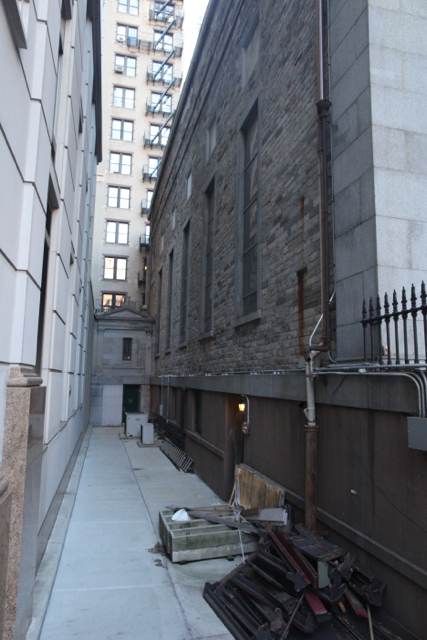
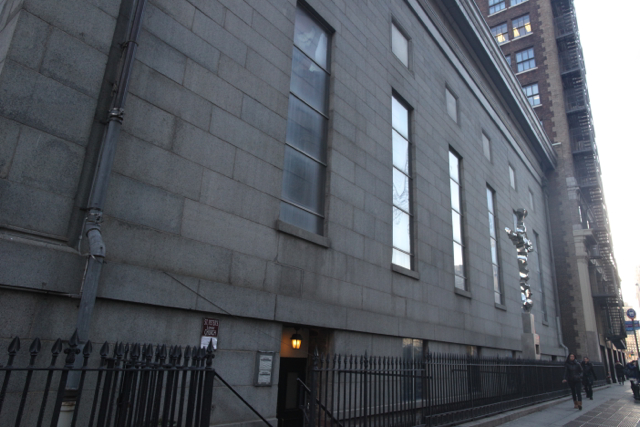
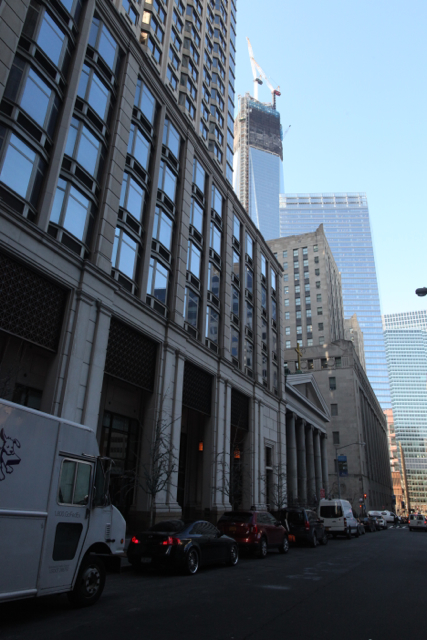
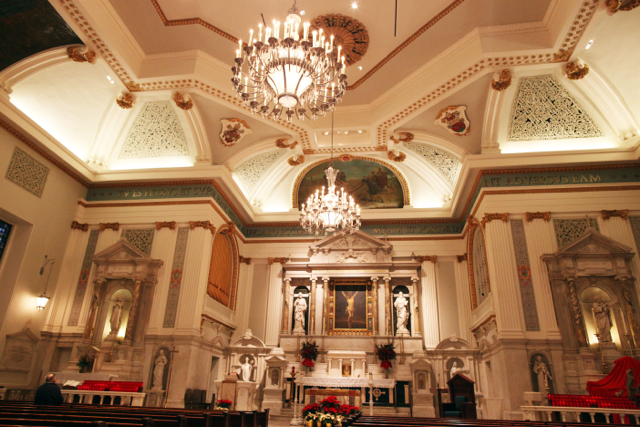
The gray stone bulk of St. Jean’s makes a dramatic impression on its Lexington Avenue – what with its columns and pediment, intricate twin towers and dome. The façade is richly ornamented and crowned by various groups of angels.
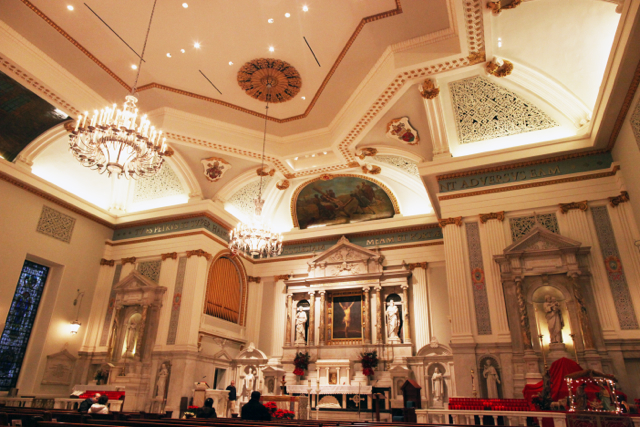
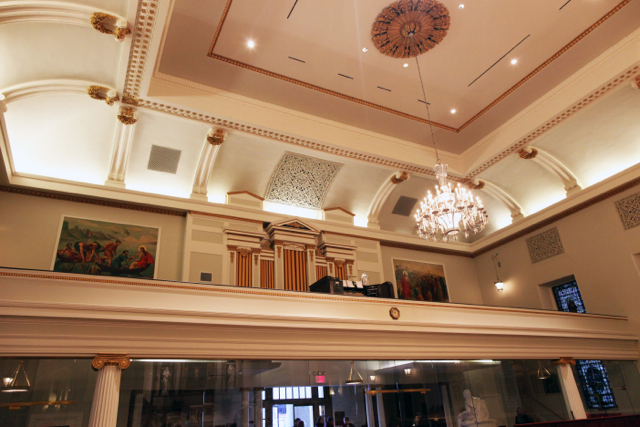
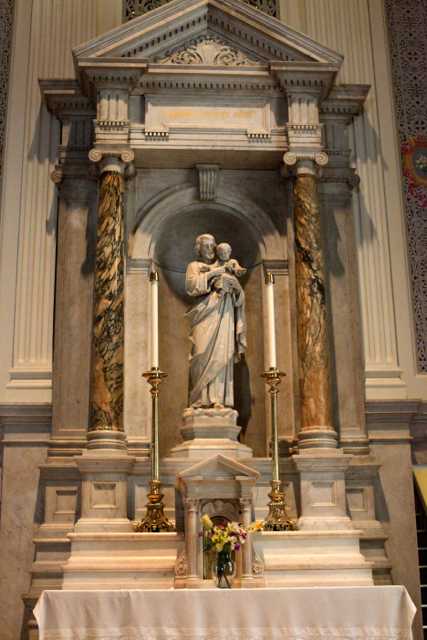
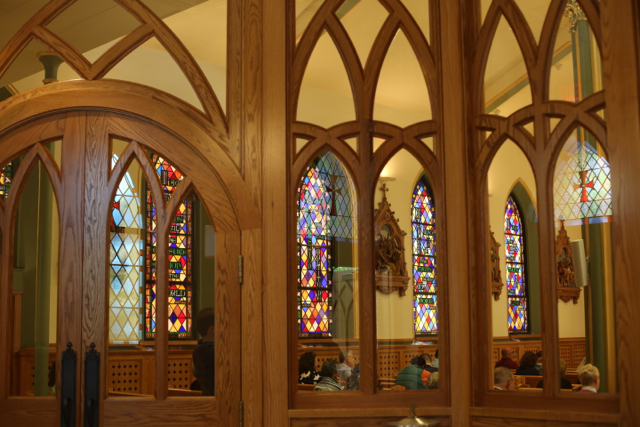
One enters the interior through a spacious narthex. Coming into the nave, the visitor is overwhelmed by the elaborate color scheme – restored in recent renovations. The grandly dimensioned church is fully articulated with nave, aisles, transept sanctuary and dome – no “ordinary” New York parish here! The visitor’s eyes can rest on innumerable architectural details. It is one of the great triumphs of the Beaux-arts school in New York!
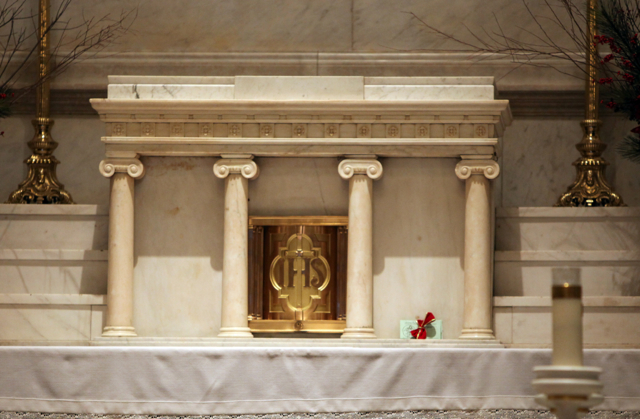
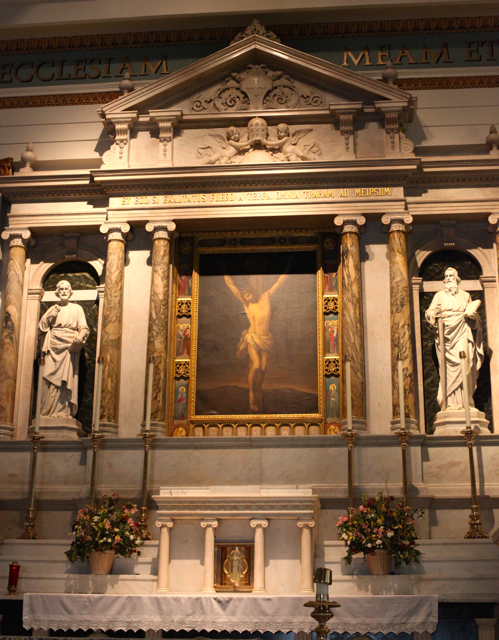
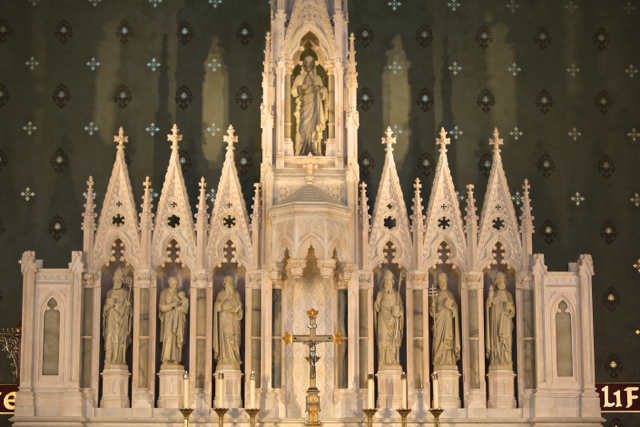
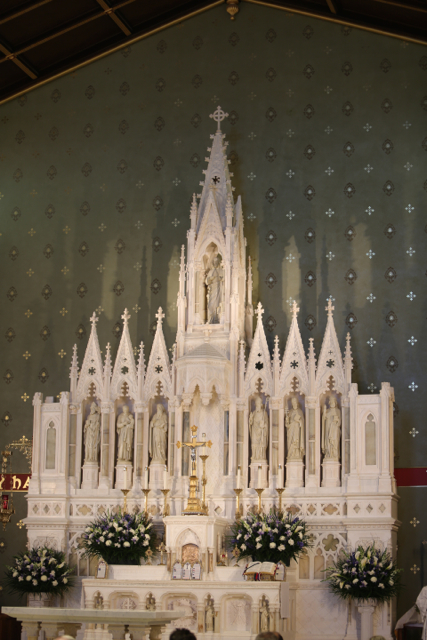
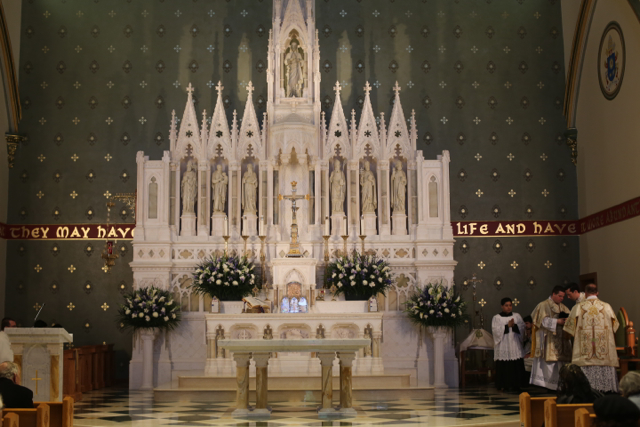
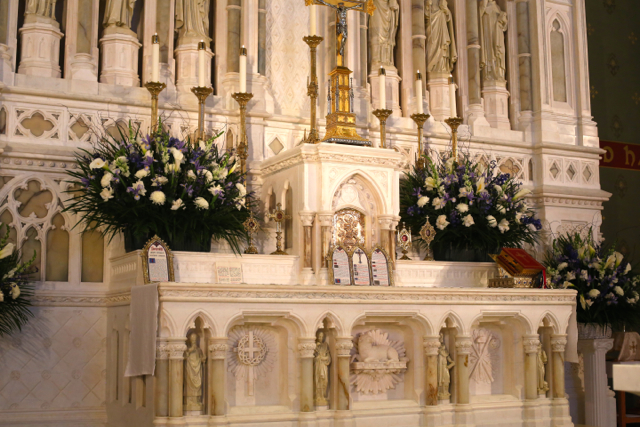
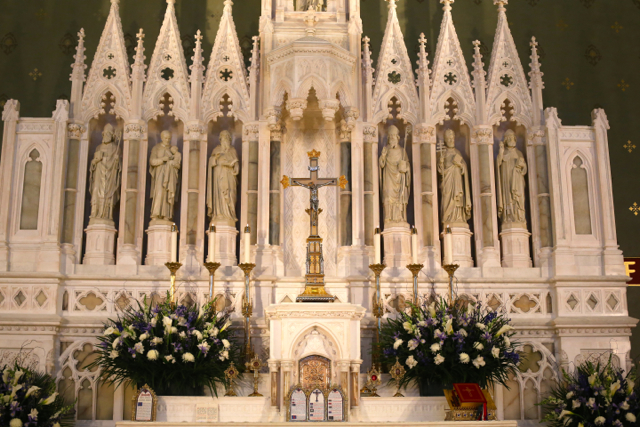
Most impressive of all is the colossal altar crowned by a monstrance the visual center of the church. There could be no better expression of the Eucharistic centeredness of the original founders.
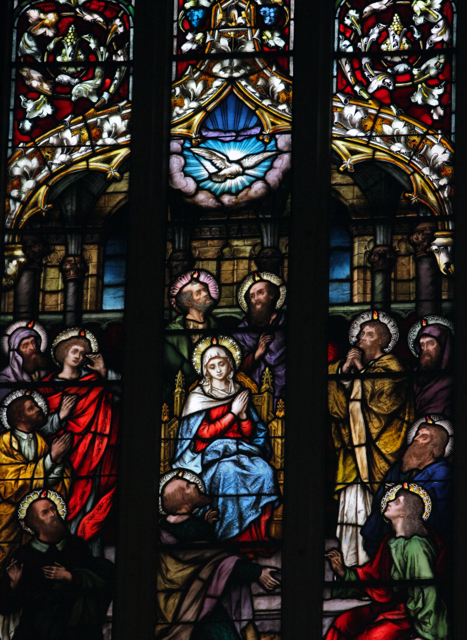
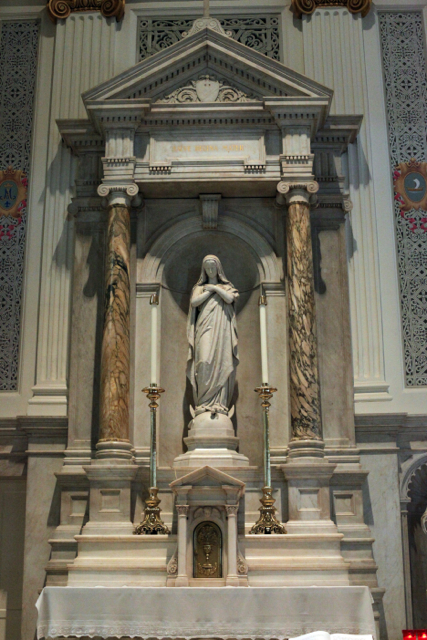
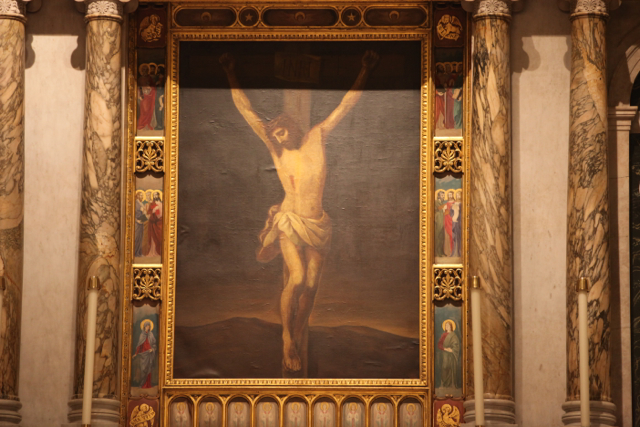
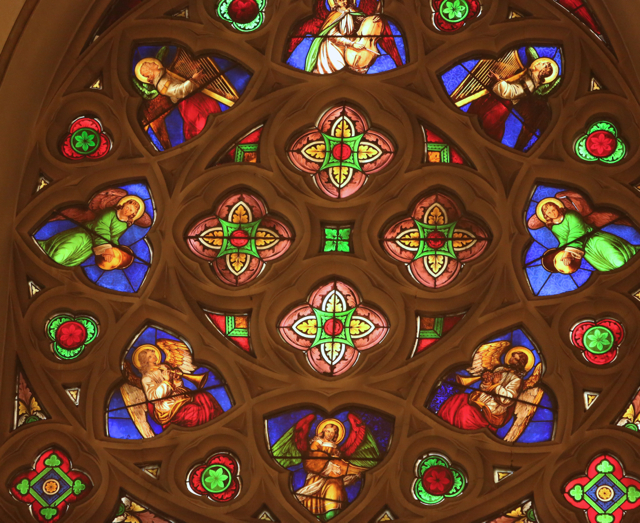
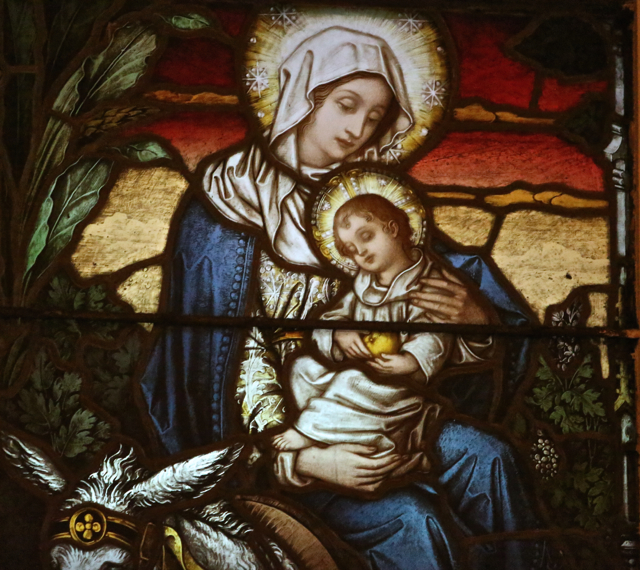
The other furnishings and stained glass reinforce the Eucharistic theme. In the sanctuary are a series of windows dealing with Old Testament types of the Eucharist. And the main windows reinforce this teaching by commemorating New Testament and Eucharistic events of more recent vintage (such the lowering of the age of first Holy Communion). This is also typical of that Golden age of New York church building – every aspect of the architecture, furnishings and decoration is intended to be in harmony, to relate and reinforce one unified message – of Eucharistic Adoration.

Miracles at the procession of the monstrance at Lourdes.

Pope Pius X lowered the age for receiving first communion.
The windows, like certain stained glass in St. Patrick’s cathedral, comes from the French studio of Lorin – in contrast to the glass from Munich or Innsbruck typically found in New York churches of that period. Certain items, like the baptismal font or the statue of St. Ann, even come from the original church.
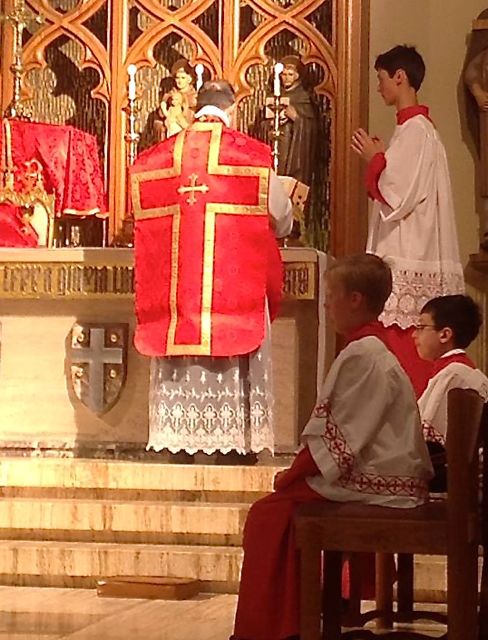
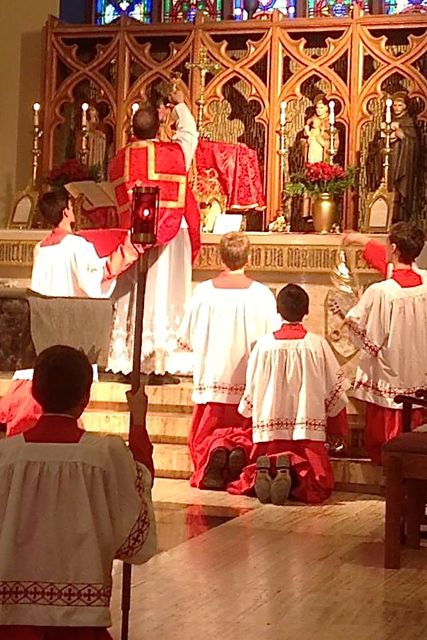
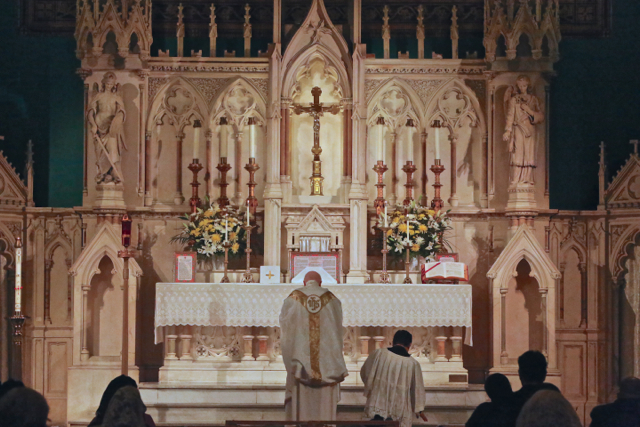
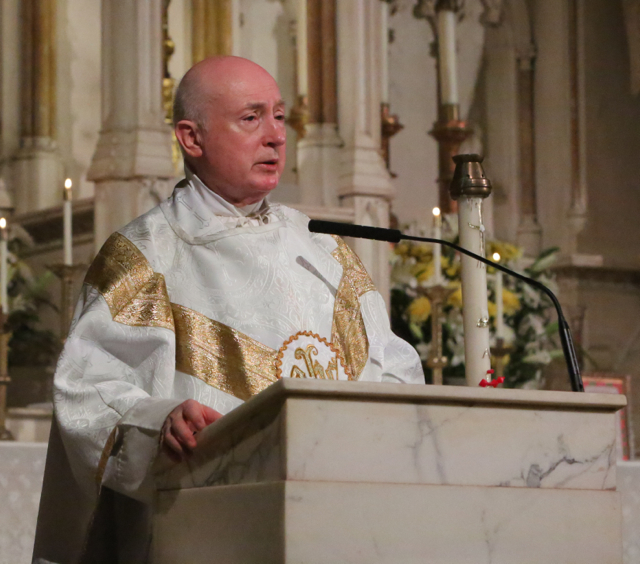
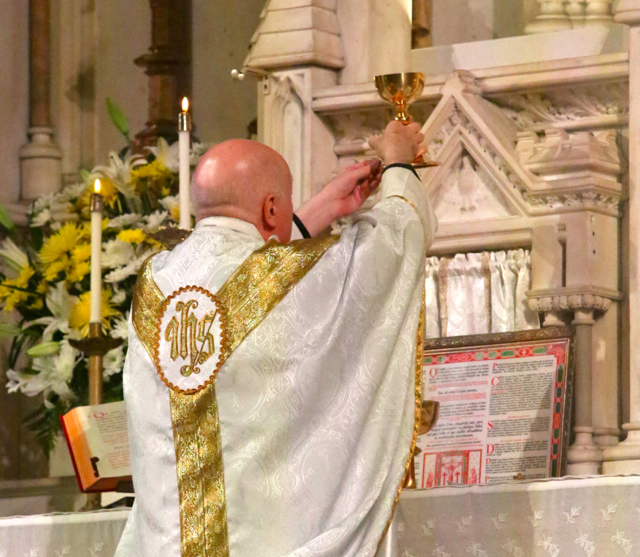
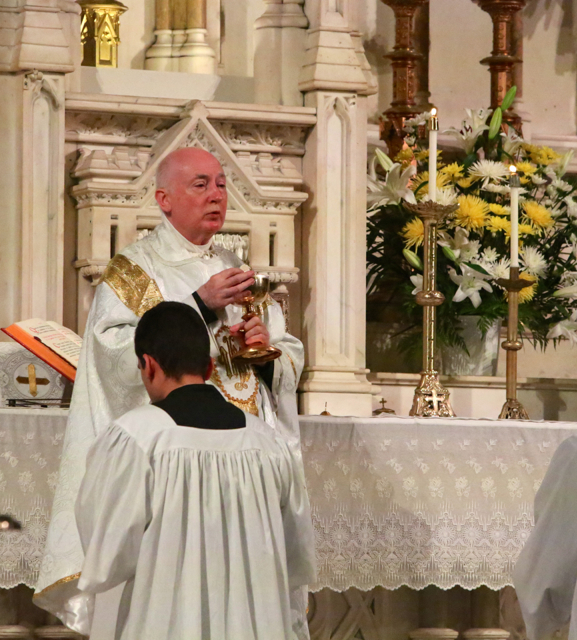
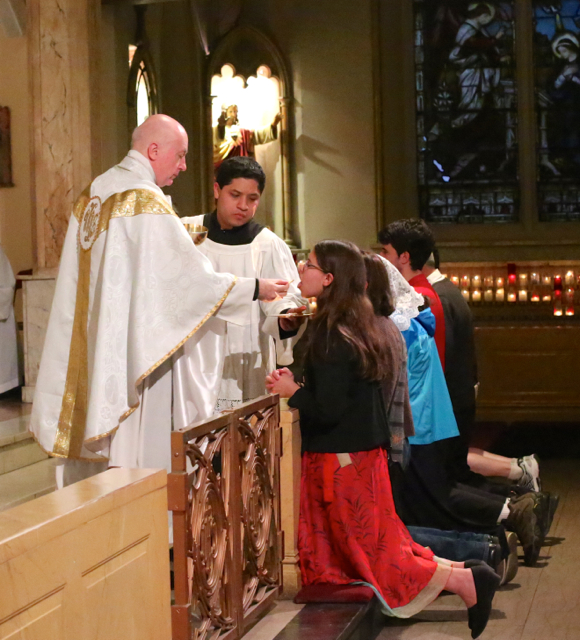
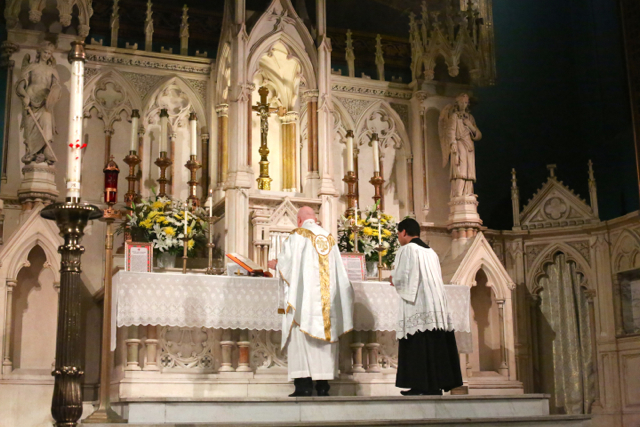
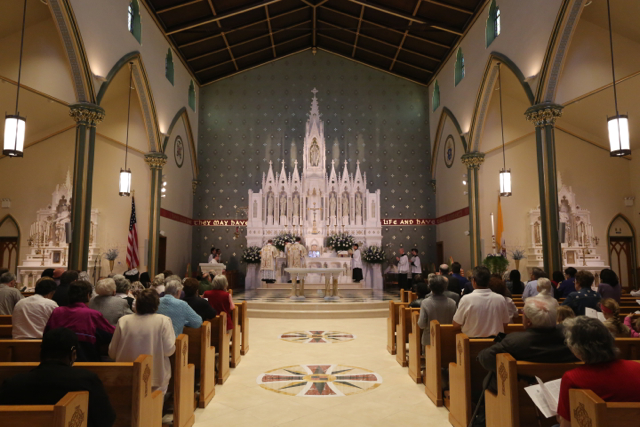
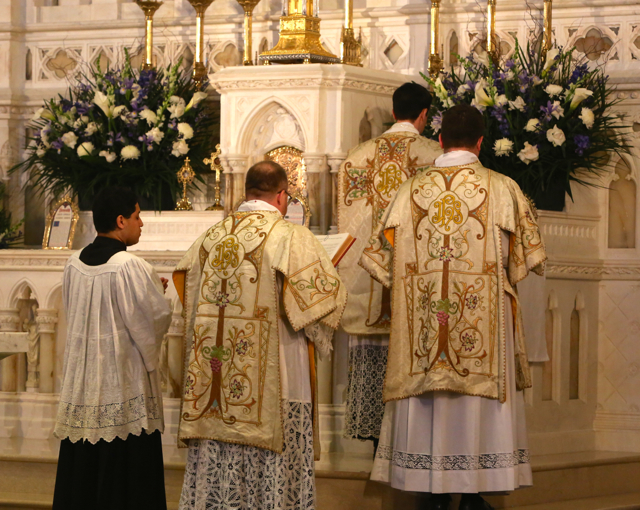
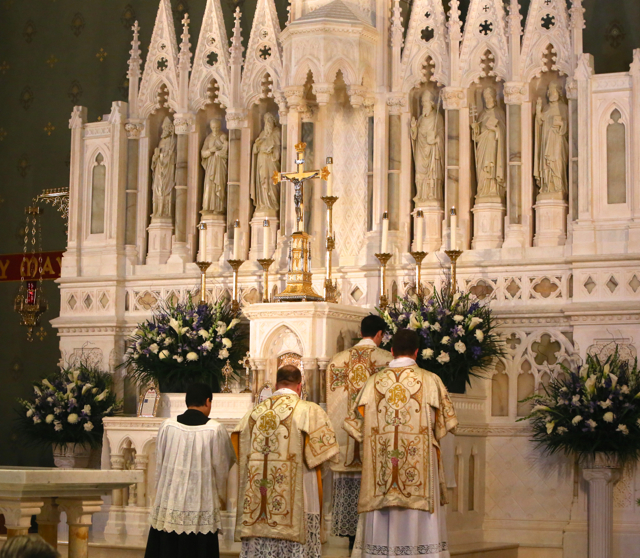
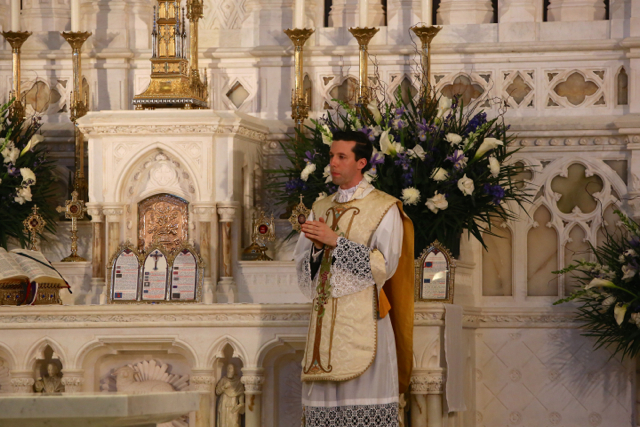
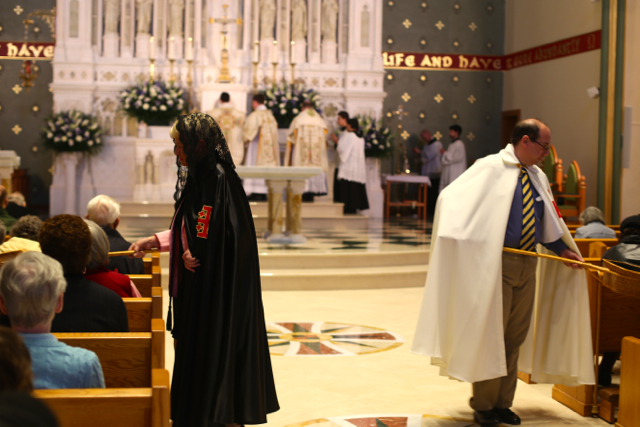
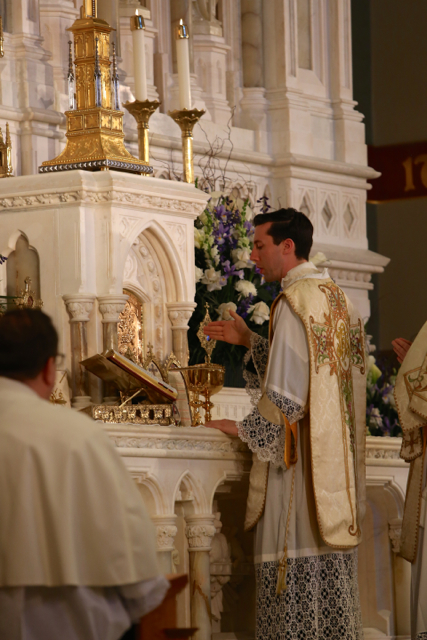
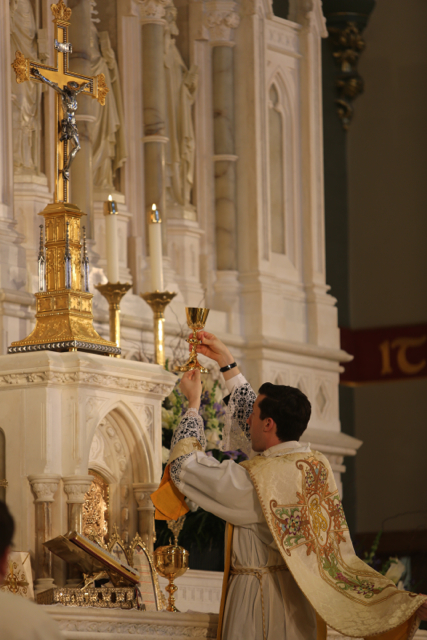
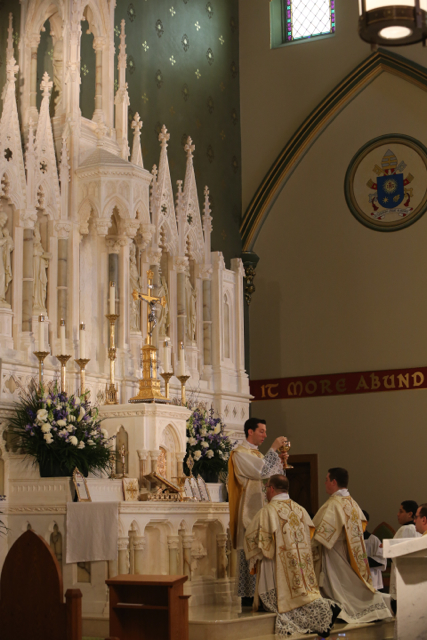
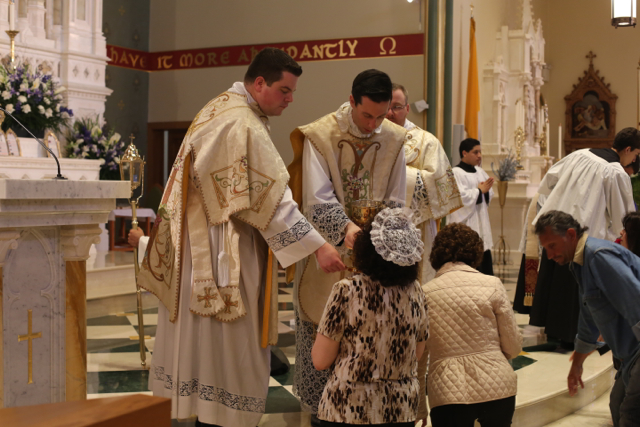
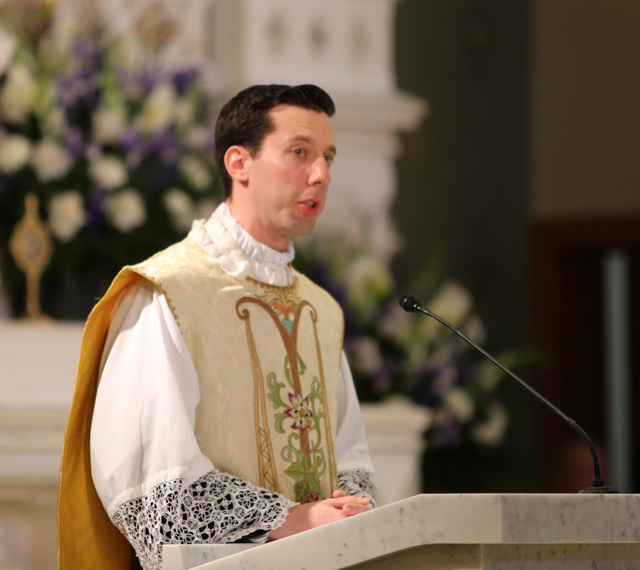
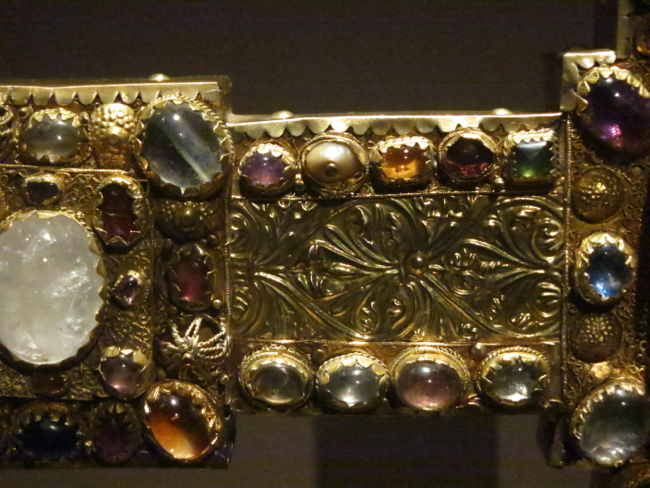
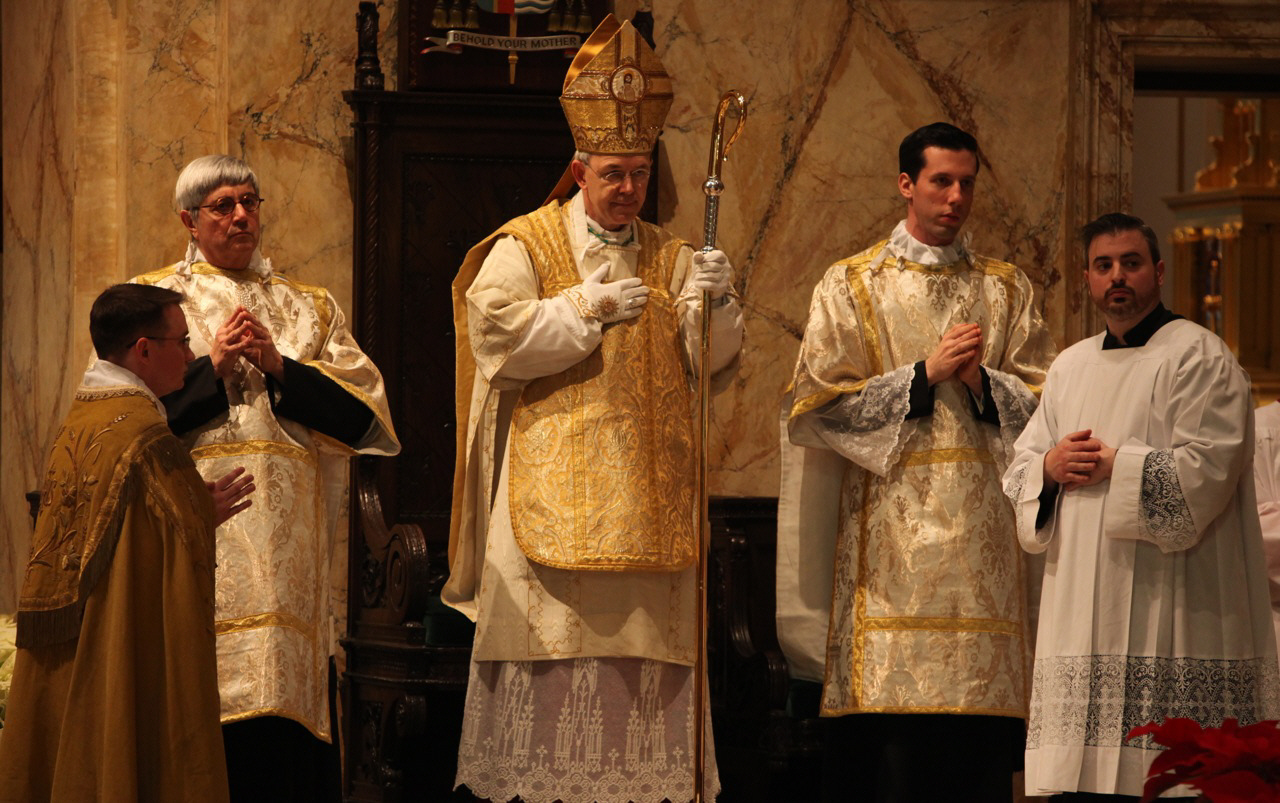
But one unique element of St. Jean’s “furnishings” requires special mention. 19th century accounts of New York churches often mention magnificent vestments especially at major liturgical events. This is entirely in accord with medieval practice; early descriptions of churches often focus more on the precious vestments and liturgical vessels than on the architecture. Now St. Jean’s possesses two truly spectacular sets of vestments: one, the “Angelic Vestments”, medieval in style, was made in Lyon in 1900. The second, made in Belgium from 1925, commemorates the declaration of Peter Eymard as a Blessed of the Church. Recently both sets have been seen to great advantage in two traditional pontifical masses celebrated at St. Jean’s. Moreover, St. Jean’s possesses precious chalices, monstrances and ciboria as well as a bust of St. Eymard by August Rodin. 6)
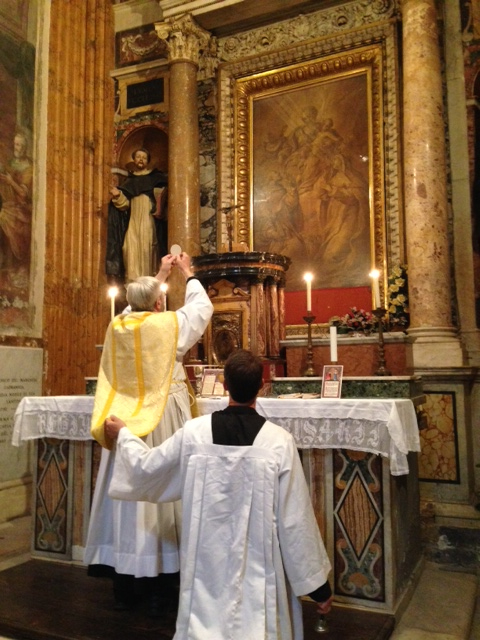
Above: At the altar the clergy are wearing the 1925 Vestments; in the foreground one of the “Angelic Vestments.” Below: one of the “Angelic Vestments.”
Above and Below: the 1925 Vestments from Belgium.
St Jean’s remained a center of devotion to the Eucharist and to St. Ann for many years. The parish opened schools – the high school still exists, the grade school was closed in 1989. And, if anything, the economic level of the neighborhood steadily rose over the years. Yet in the 1960’s and after “St. Jean’s” shared the woes of New York City and of the post-conciliar Church. The liturgical changes wrought in the wake of the Council most directly clashed with the truly “Tridentine” Eucharistic orientation of the whole church. The “people’s altar “ (brought from the former lower church) stands in shocking contrast to the old high altar and its great reredos.
By 1987 the exterior was falling apart. In that year the pastor began a series of costly restorations that have continued to the present day. The structure of the church was restored and the interior repainted. Many other individual changes were made to the chapels and furnishings. This all has come at a price. As noted, the parochial school closed. Buildings of the large complex surrounding the church were sold off. The former lower church was converted into a community center and a theater.
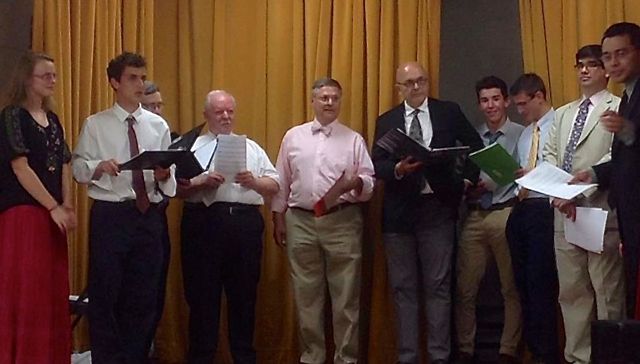
At present the towers are being repaired in the latest campaign of restoration. St Jean’s soldiers on – among other things, the parish has a music program unusually active for a Catholic church. But do the spiritual and intellectual sources of this great structure – Eucharistic devotion and reverence for the Western classical architectural tradition – still have any relevance for the Catholic faithful in 2014? Those of a younger generation seeking to reconnect with its own religious and artistic heritage will have to give the final answer to that question. 7)
1) Should I point out that the name of this church is pronounced St.GENE’s? Certain parishioners of today either don’t know that or avoid it out of embarrassment.
2) Kamas, Rev. John A. and Lopez, Barbara O’Dwyer; Eglise Saint Jean Baptiste at 3-5 (The Church of St Jean Baptiste, New York 2001)
3) http://en.wikipedia.org/wiki/St._Jean_Baptiste_Catholic_Church
4) http://en.wikipedia.org/wiki/Thomas_Fortune_Ryan
5) Kamas and Lopez, op.cit at 11-12. (The actual cost turned out to be a multiple of this figure.)
6) Kamas and Lopez, op.cit at 113-125.
7) In recent years St. Jean’s has seen magnificent, well attended pontifical masses in the Extraordinary Form as well as musically splendid services in the Ordinary Form.
Above: A remnant of the communion rail. Below: another view of the dome.
5
May
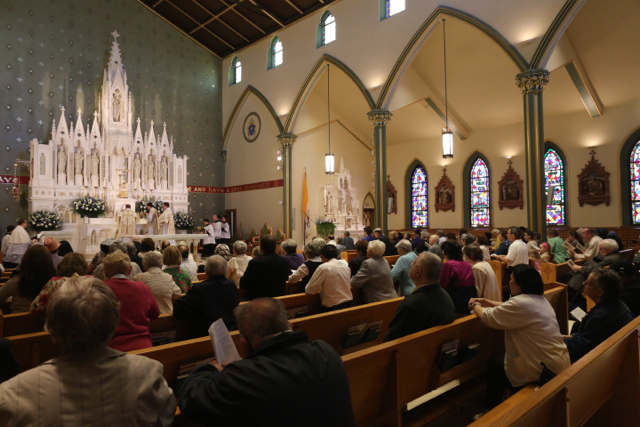
Raymond Cardinal Burke, Prefect of the Supreme Tribunal of the Apostolic Signatura at the Vatican, will be coming to St. Mary Church to offer the monthly pro-life extraordinary FormMass on Saturday May 10 at 9:00 am. Cardinal Burke helped St. Mary Church in its fundraising efforts last year for the renovation of the church. He will be coming to see the newly renovated church, to offer the Holy Sacrifice of the Mass, and to greet the people. A reception will be held in Hajus Hall immediately after the Mass.
4
May
The Creation by Hildreth Meiere. All from the Church of St.Bartholomew, New York.
“Hildreth Meiere – Forgotten Artist”
Celia McGee of the New York Times writes about a new book on the works of Hildreth Meiere – and calls our attention to a walking tour of some of her work in New York scheduled for May 18. It being the New York Times, there is of course no mention of Meiere’s role as a Catholic artist – even though an exhibit here two years ago emphasized her religious works. For more on this aspect of her work see here (by us) and this excellent article by Matthew Alderman in the NLM.
4
May
A group of pilgrims accompanied Canon Jean Marie Moreau of Oratory of St. Anthony of Padua in West Orange, NY, on a pilgrimage to the Holy Land from April 23 to May 2. We are indebted to Joanne O’Beirne for sending us these beautiful photos.
Mount of Beatitudes
Church of the Condemnation, Jerusalem
Readings at Benedictine Romanesque Church from the Crusades
Via Dolorosa
4
May
The Catholic Artists Society succeeded in filling the basilica of St Patrick’s old Cathedral for their annual mass – a Solemn High Mass in the Extraordinary Form offered fro the intentions of the members of the Catholic Artists Society and for the salvation of all artists.
Fr. Brian Taylor was the celebrant and the pastor of St. Patrick’s, Msgr Donald Sakano, preached. Msgr Sakano described the refounding of art under the New Covenant which succeeded the banning of graven images in the Old; and the prominent role of the image of the Good Shepherd in early Christian art – this Sunday being Good Shepherd Sunday in the EF.
Jared Lamenzo was organist and choirmaster; Joshua Smith was director. The music included the Berliner Messe of Arvo Part as well as works by Perotin, Alain, Hassler and Distler. Obviously the basilica’s magnificent Henry Erben organ was used to great advantage.
4
May
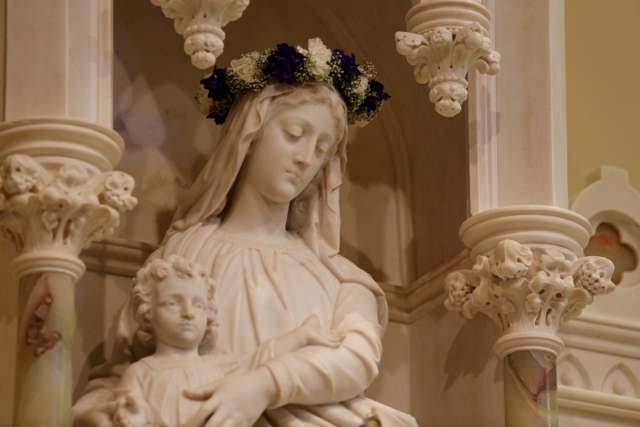
Today at St. Mary’s Church Norwalk, CT, ten children received Our Lord for the first time in Holy Communion during the 9:30 am Solemn High Mass. Every year first communicants are given the option of receiving First Holy Communion during the Extraordinary Form Mass or the Novus Ordo Mass. A small but growing percentage are choosing the Extraordinary Form. The celebrant was Fr. Markey. The St Mary Schola Cantorum sang the Missa Pange Lingua of Josquin des Prez.
At the beginning of Mass, Father Markey invests each first communicant in the scapular of Our Lady of Mt. Carmel
30
Apr
At the Second Ecumenical Council of the Vatican divinely debated among the forgathered Fathers was the tantalizing topic of Collegiality, the intrepid idea that, as sacred successors of the terrific Twelve, the Bishops actually have some semblance of a say in reliably and religiously running the Church of God and are not simply petulant paper pushing moping middle managers (be that though they may be).
In an intriguing intervention during those delightful discussions, that estimable ecclesiastic, Giuseppe Cardinal Siri, sagaciously stated that he had scrupulously scoured the Sacred Scriptures and finally found only one singularly solitary instance of the Apostolic College united uniformly in an authoritative act of Collegiality:
“And they all fled.”
Mr. Screwtape
29
Apr
An article discussing with complete frankness and accuracy the afflictions of the Church in France and elsewhere – including the United States.
“The reasons (for the growing threat of bankruptcy) are the decline of the church collection – the absolute amount increases slightly but the number of donors decreases and ages – but also the decline in religious practice, the decline of vocations to the priesthood, the aging of the clergy… One could also mention the grand projects initiated by the dioceses in the last few years: the building of diocesan houses, the reconfiguration of cathedrals…
(Due to the lack of clergy the dioceses are forced to hire laymen paid at much higher salaries)
“The difficulties of the dioceses are anything but trivial. The root is found in the general collapse of spirituality and of the Faith in France. With the percentage of practicing Catholics at only 8% – 3% in the center and south-west – the terrible misery of the French church can no longer be hidden….”
“Beyond the financial situation of the dioceses the most general problem – which will doom a number of dioceses in the middle term – is the lack of priests. There were 50,000 priests in 1970, 25,203 in 1990, 13,822 in 2011 and there will be 6,000 in 2020. Around 130 priests are ordained each year but eight times that number leave the priesthood because of old age or death.”
“Among the principal places where the seeds of vocations (still) are found: families, parishes, scouting – but also new communities like Taize or Emmanuel – and also those who adhere to Tradition, that is, the Tridentine mass. Everywhere in France the Tridentine parishes fill their churches and raise up vocations. In 2007 Pope Benedict XVI reinserted the Tridentine rite into the normal framework of the liturgy (Motu Proprio), which permitted it to be made generally available in a number of dioceses. A great number of traditionalists returned to the Church. Only five dioceses still resist, under the pressure of priest more in rupture with tradition of the Church than elsewhere. Should one be surprised that among them one finds the bishopric of Mende – under a suspended sentence (of bankruptcy) – and the neighboring bishopric of Viviers, where vocations have collapsed and where the ancient Grand Seminary of Viviers is nothing more than a huge ghost ship?”
Thanks to “Le Forum Catholique.”